
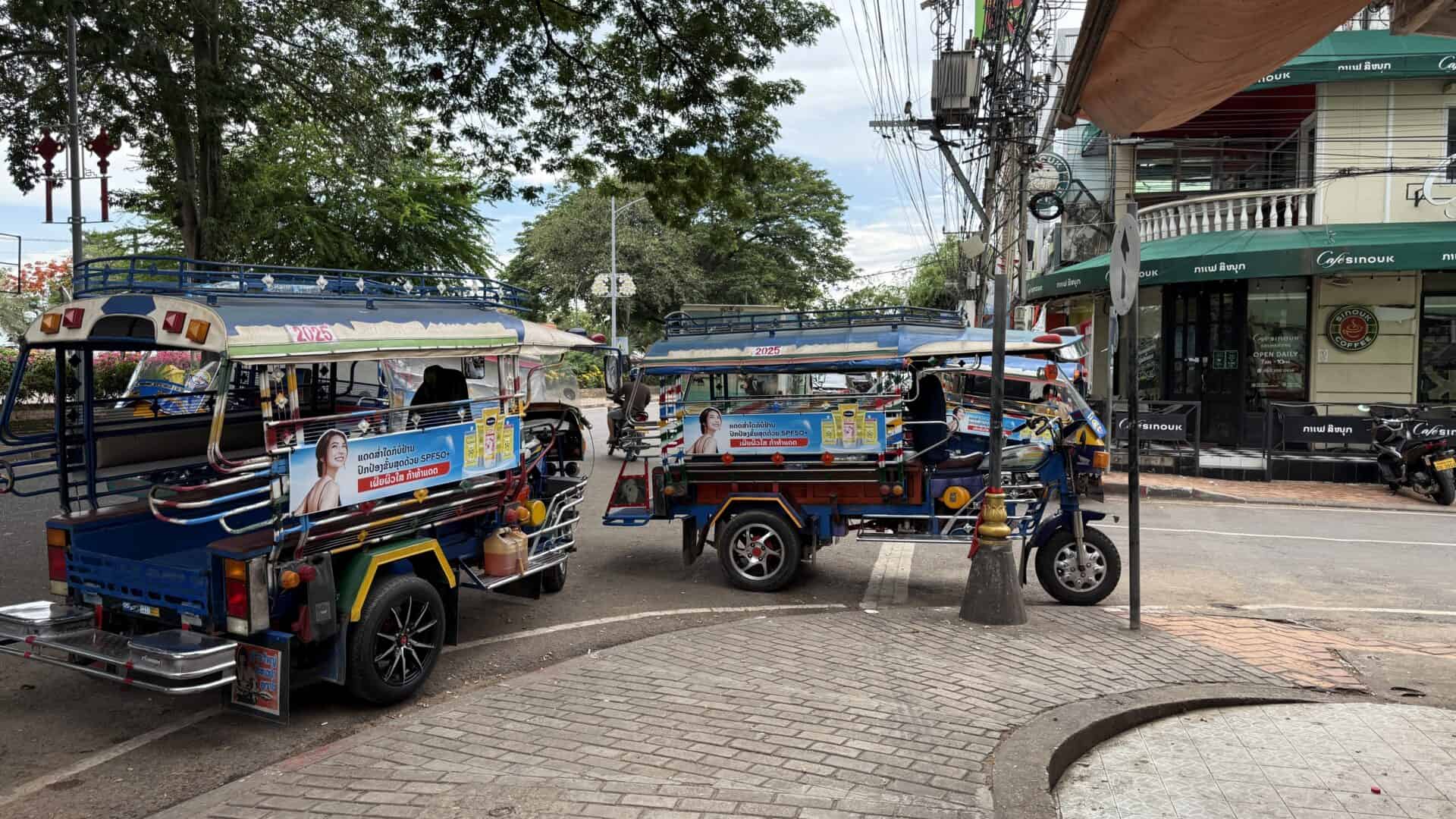
Guide to Visiting Vientiane, Laos
Thinking of visiting Vientiane, Laos? This guide with make your trip planning easier.
Vientiane is the capital and largest city of Laos, located along the northeastern bank of the Mekong River, near the border with Thailand.
I could have stayed in Vientiane for several more days. Vientiane maintains a relatively laid-back and relaxed atmosphere, especially compared to other Southeast Asian capitals. I could walk around the night markets without being haggled every few feet. And I felt very safe as a solo female traveler.

Getting There
The three main options for entering Laos are via slow boat from Thailand, flying into Vientiane or Luang Prabang or taking the bus from either Thailand or Vietnam.
I flew into Vientiane, Laos, from China. Although you can buy an e-visa in advance, you can save 10 USD if you buy it on arrival, and the process is easy. It costs 40 USD. In case you left your USD in your check bag like me, they do take Laotian Kip, and there is an ATM in the immigration area. You also need two passport-size photos (I carry some with me when I am traveling), and you need to fill out the customs form that is available in the immigration area.
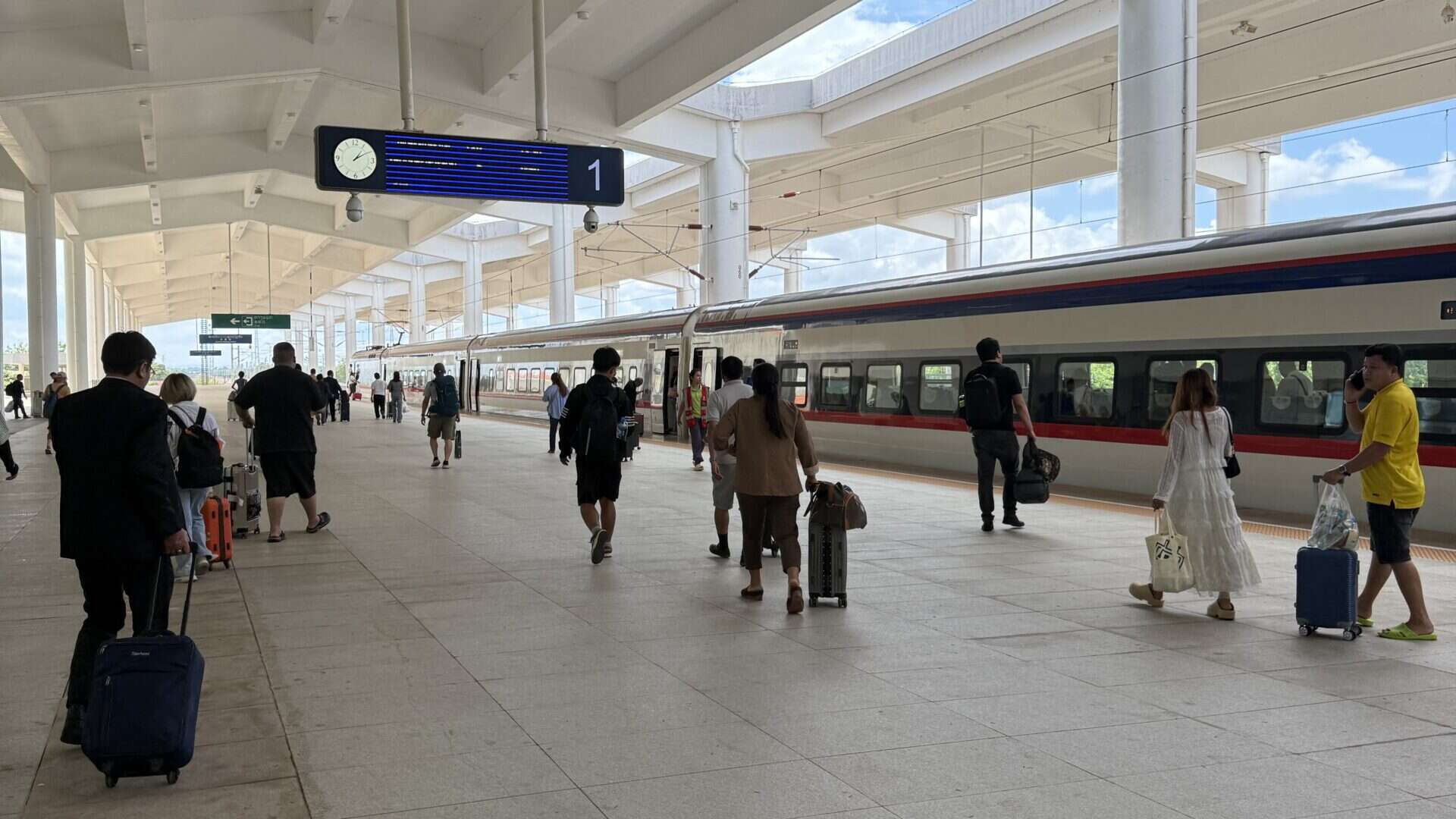
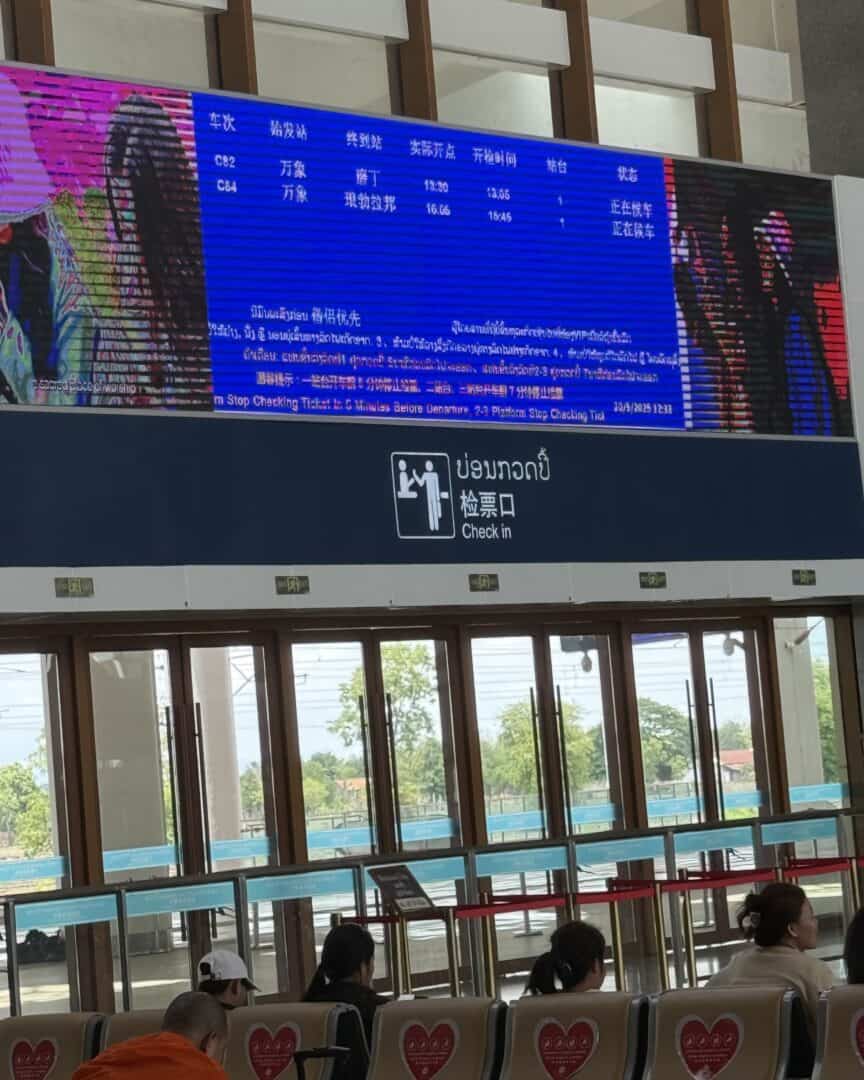
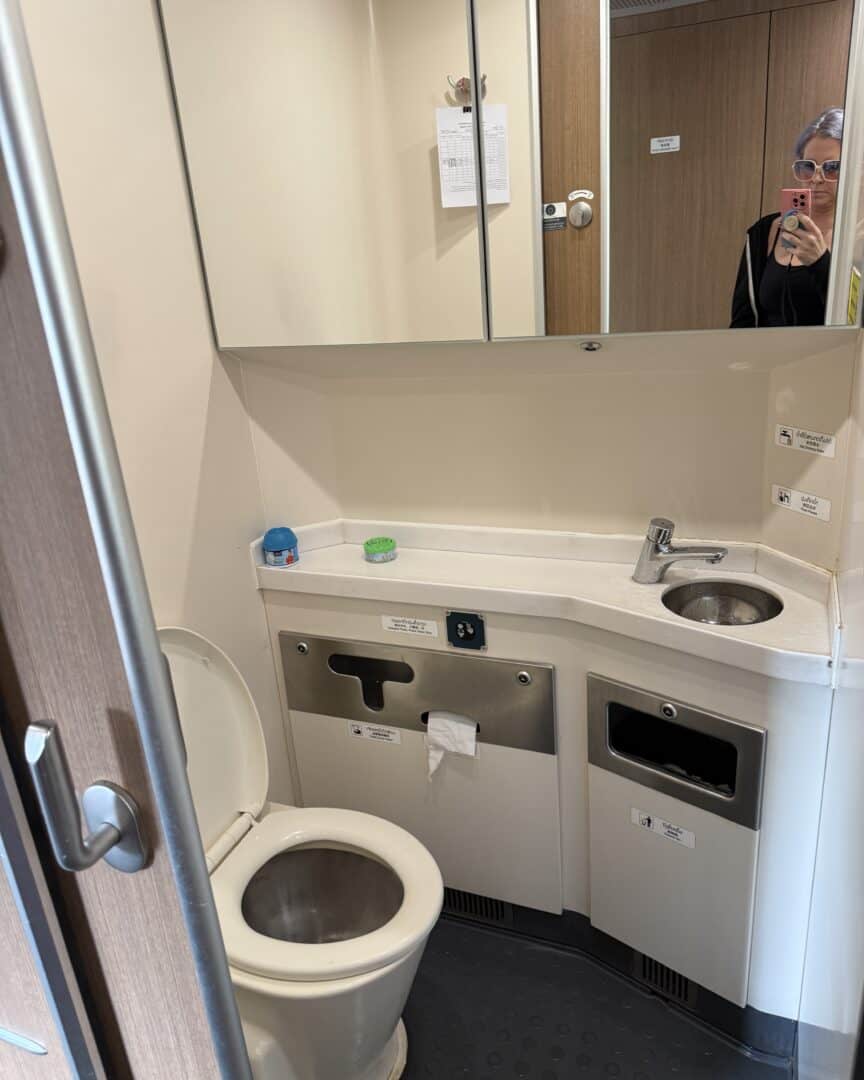
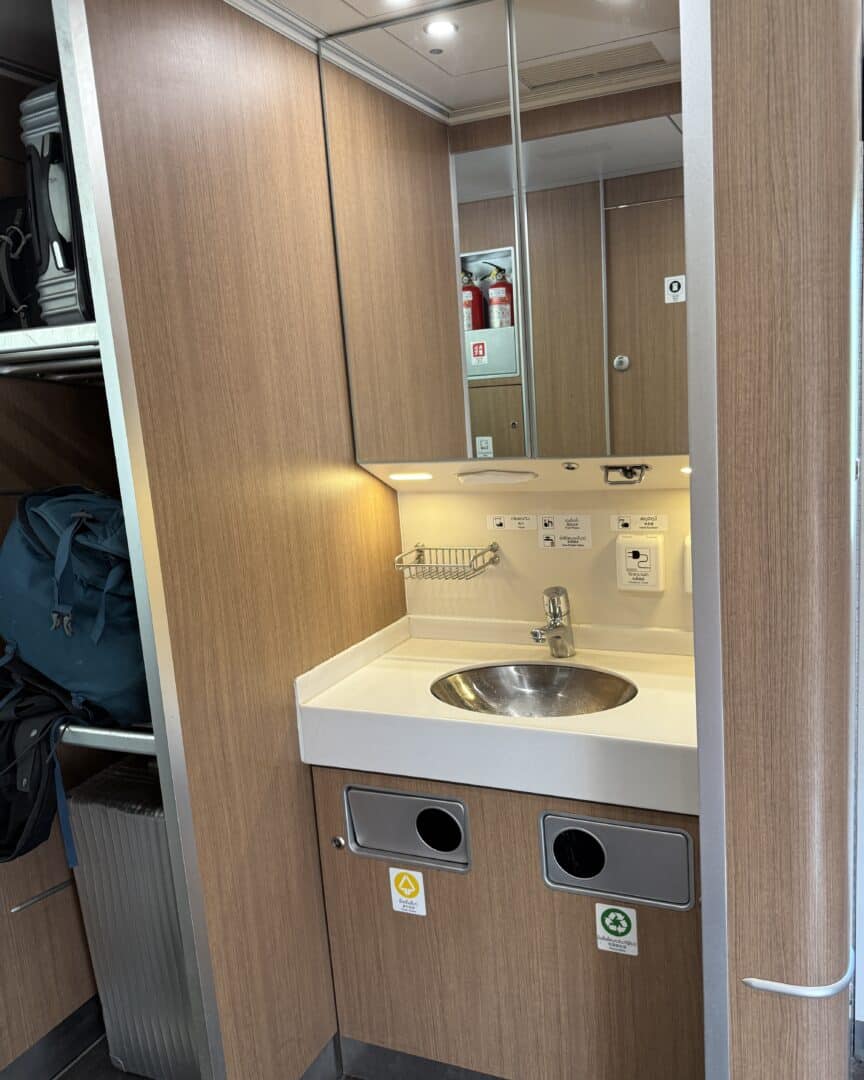
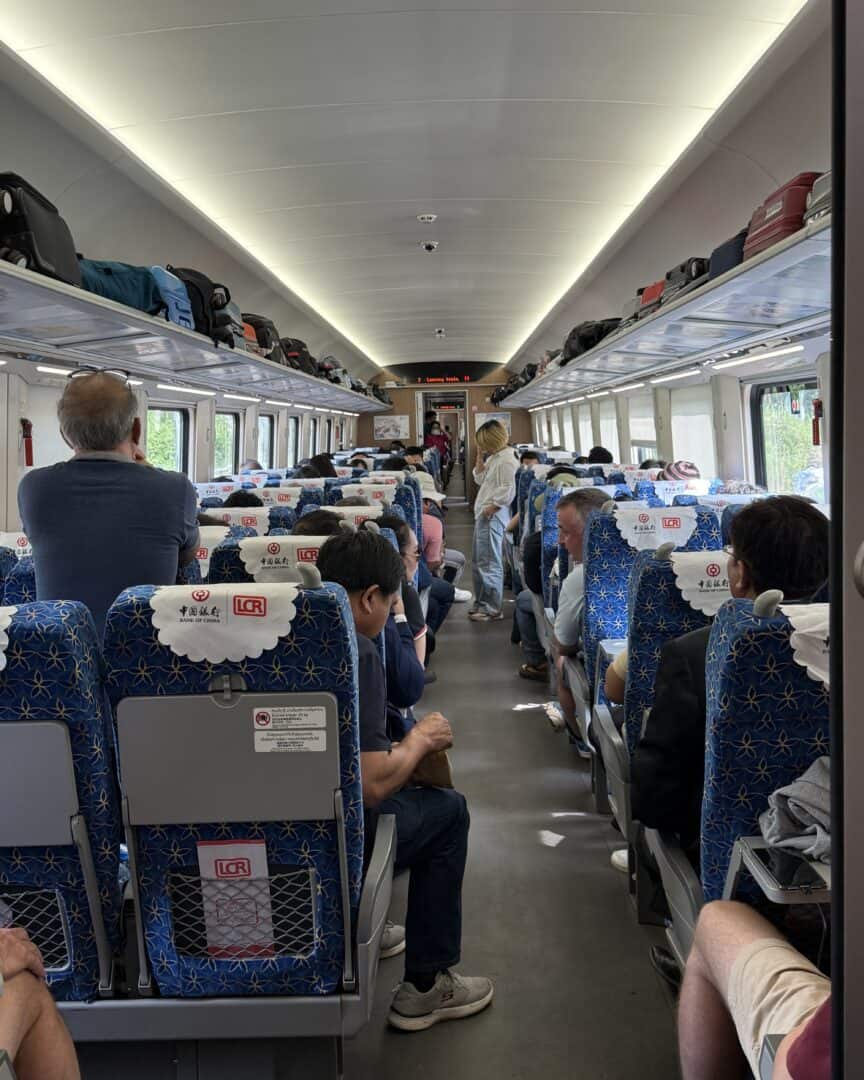
If you are planning to travel to Luang Prabang or Vang Vieng, I recommend the train. It was clean, cheap and saved a lot of time. Check out my guide to the train in Laos.
Transportation
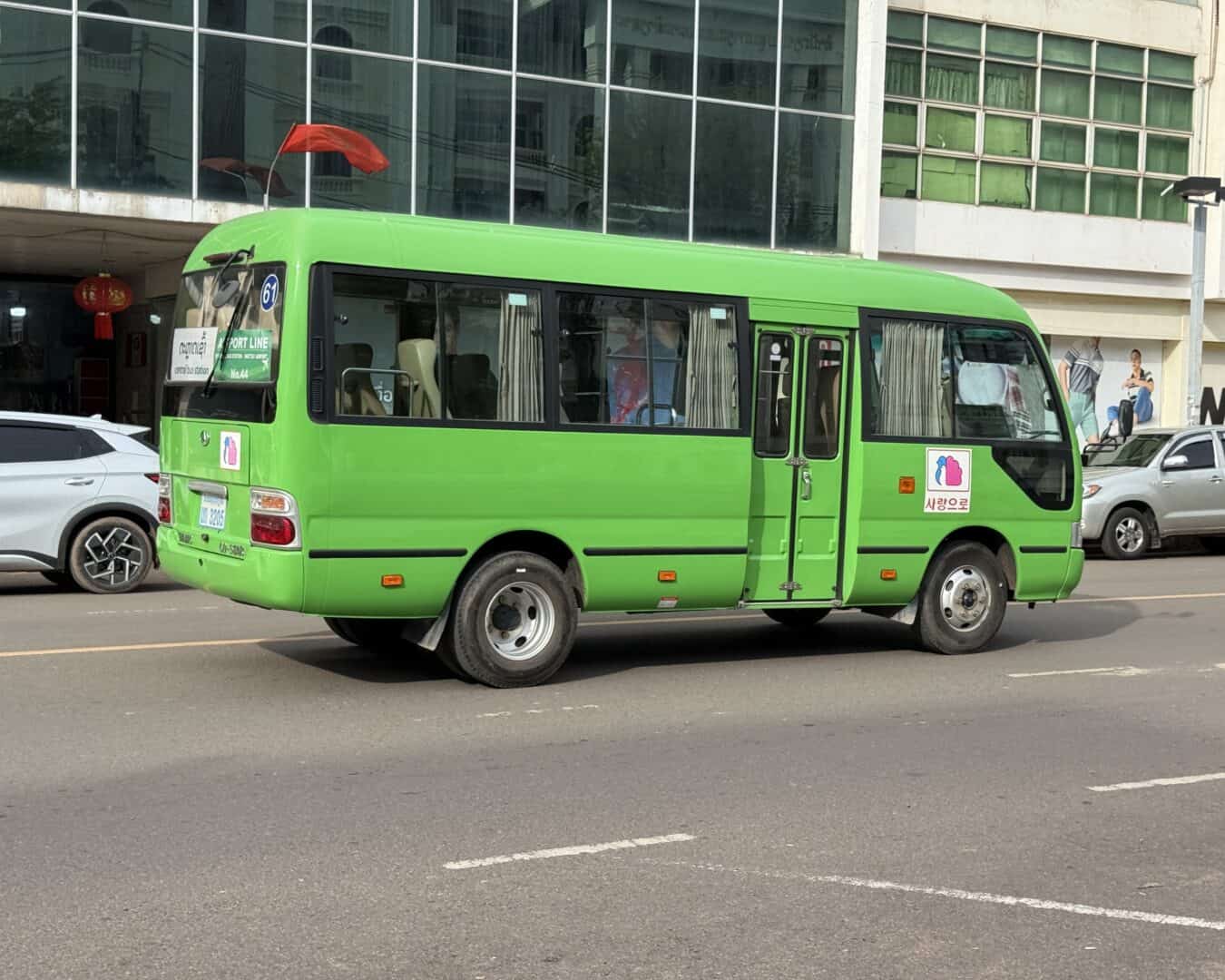
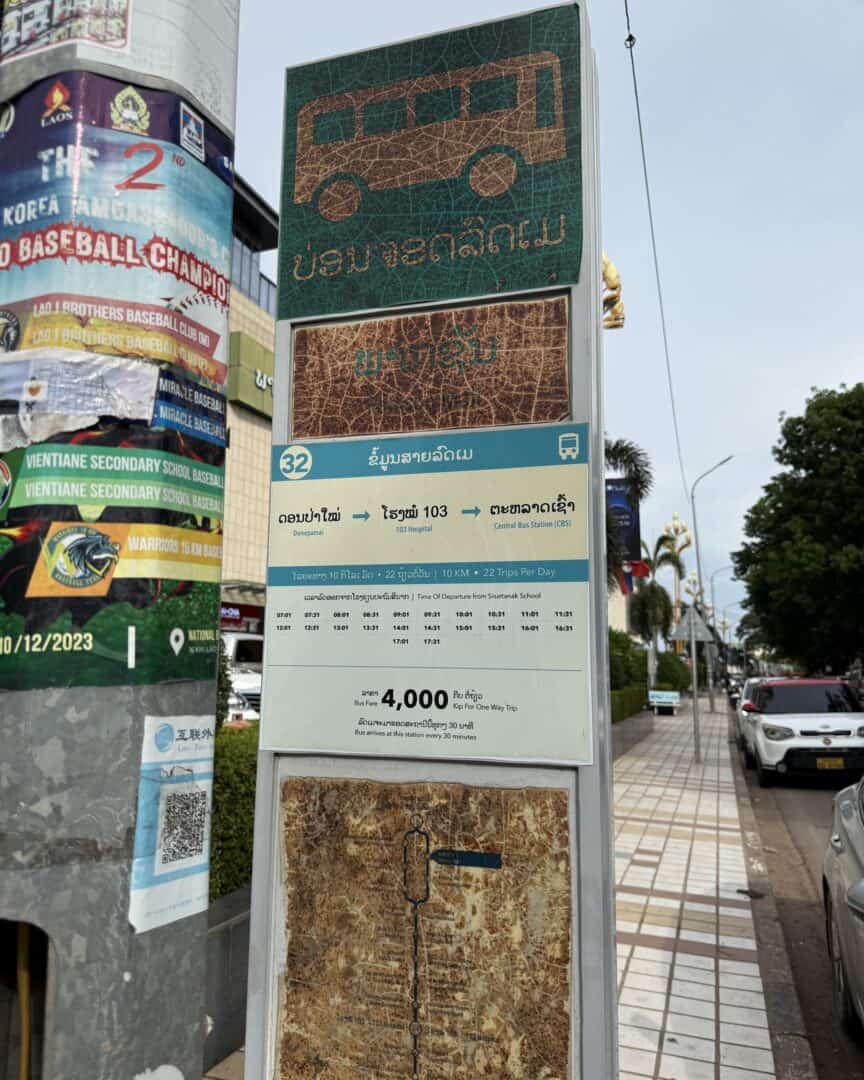
The city center is small and easy to navigate on foot or by bicycle, but for longer distances, Vientiane has buses throughout the city. You can’t miss the lime-green buses. The bus is also the best way to travel from the airport to your accommodations.
Loca is the ride-share app in Laos. My flight arrived late at night, and the buses had stopped running. I had no problem getting a LOCA.
Where to stay?
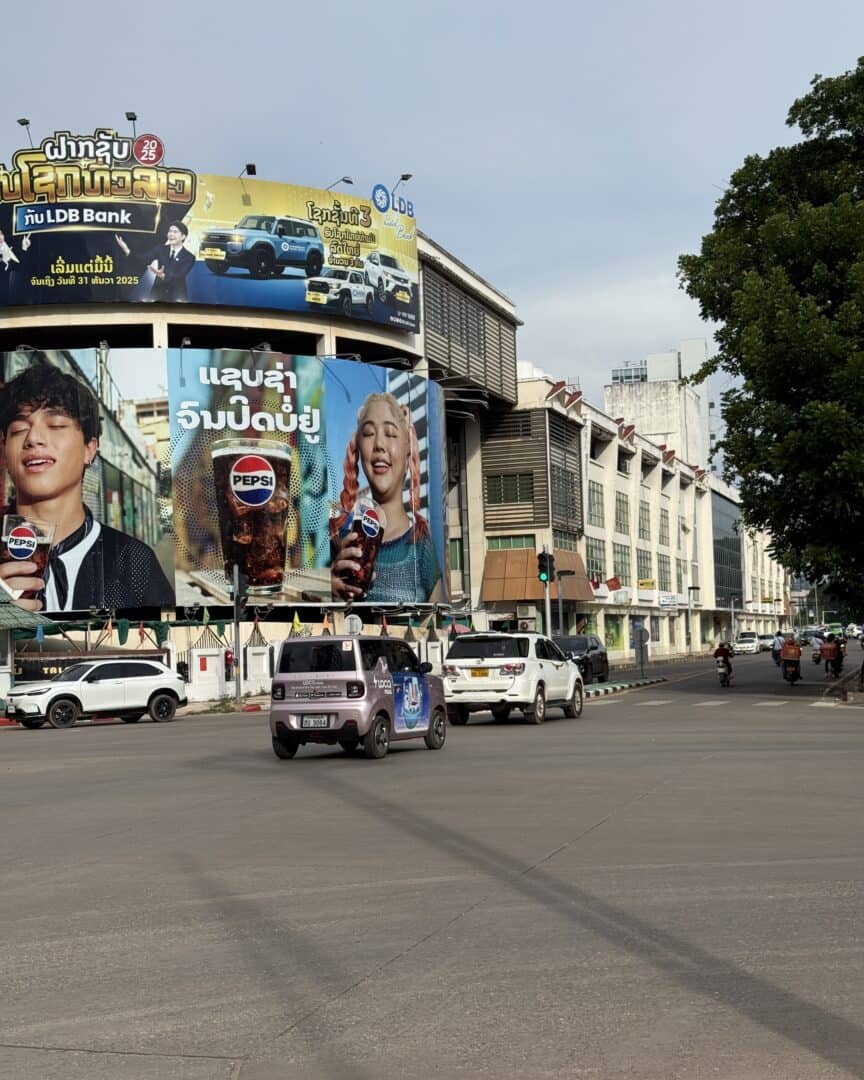
My favorite areas of the city were Ban Anou and Watchan. They had beach town vibes, and the majority of cheaper accommodations are located here.
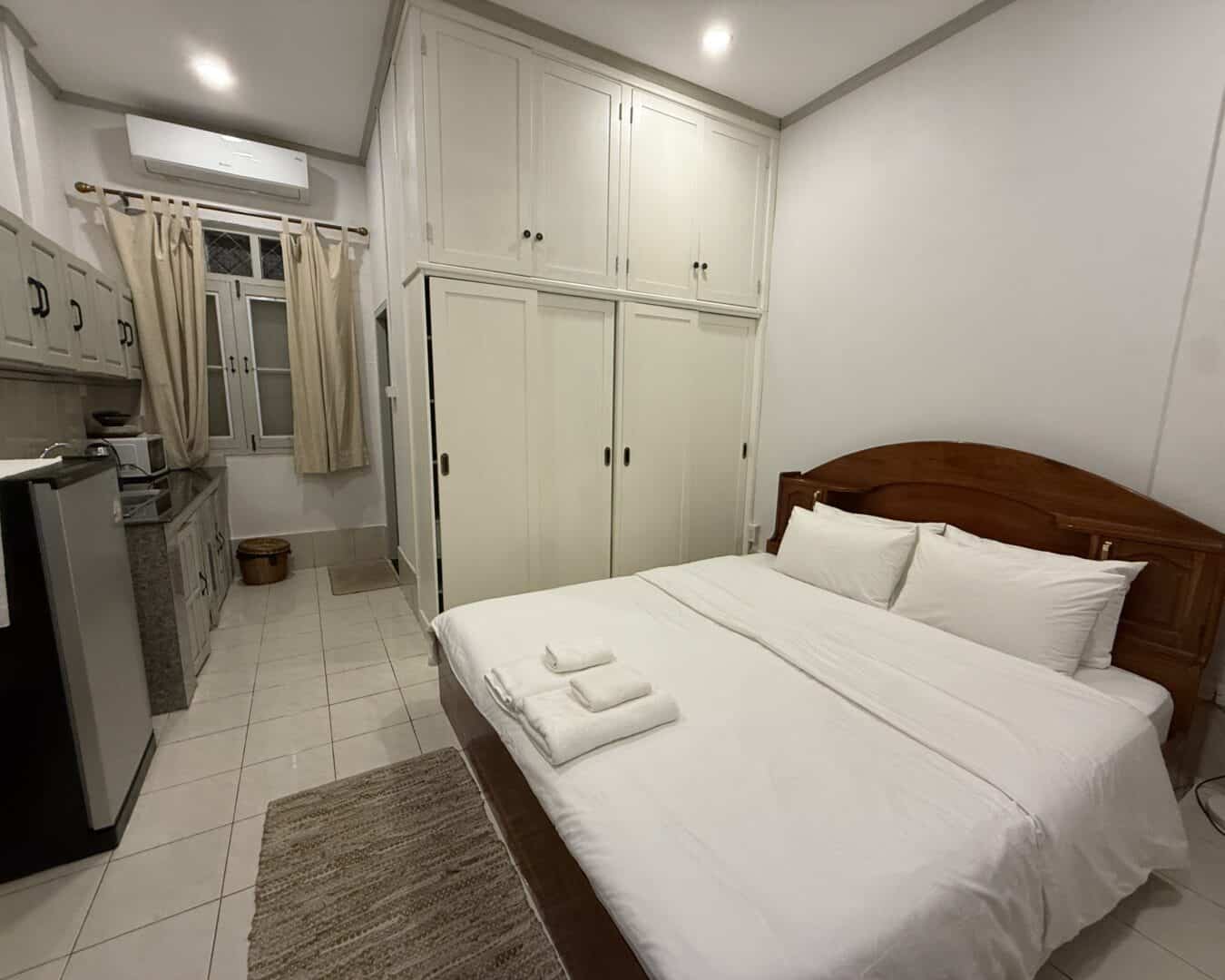
Sathiti Cafe & Bed– I had a studio above this cute coffee shop. It was clean and located near the night food market. I don’t recommend it for remote work, though. The wifi was very spotty.
Apatuxay Vientiane Hotel & Apartment – This hostel is centered around a pool. The bar has cheap beer, and it was very easy to meet people. They had a mix of dorms and private rooms.
What to do?
Visit Temples
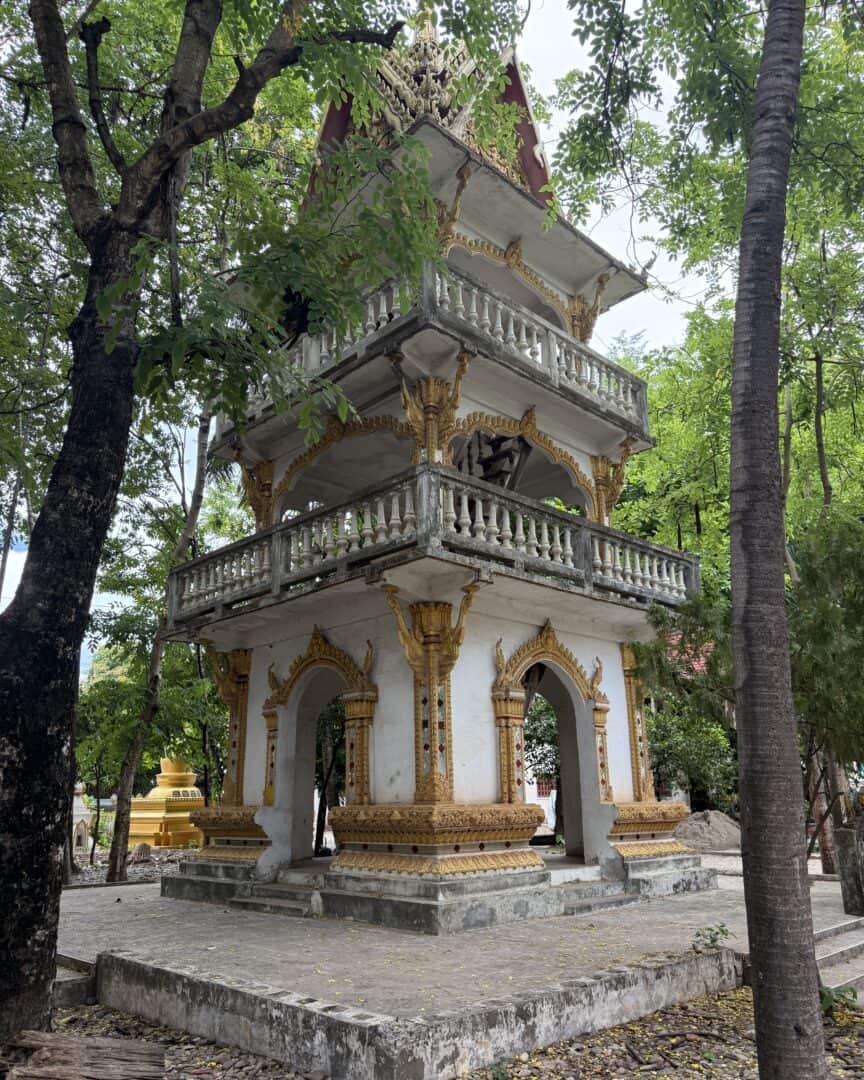
I had temple burnout at this point in my travels, but if you do not, Vientiane has multiple temples to explore.
In the Ban Anou and Watchan neighborhoods, there was no one guarding the area or trying to sell you something. As you moved to the more popular ones downtown, you would need to give a donation to enter. Prepare to be approached by people trying to sell you a cheap fan or figurine. On another note, although I understand they need the funding, it was a shame to see these temples being used for paid parking.
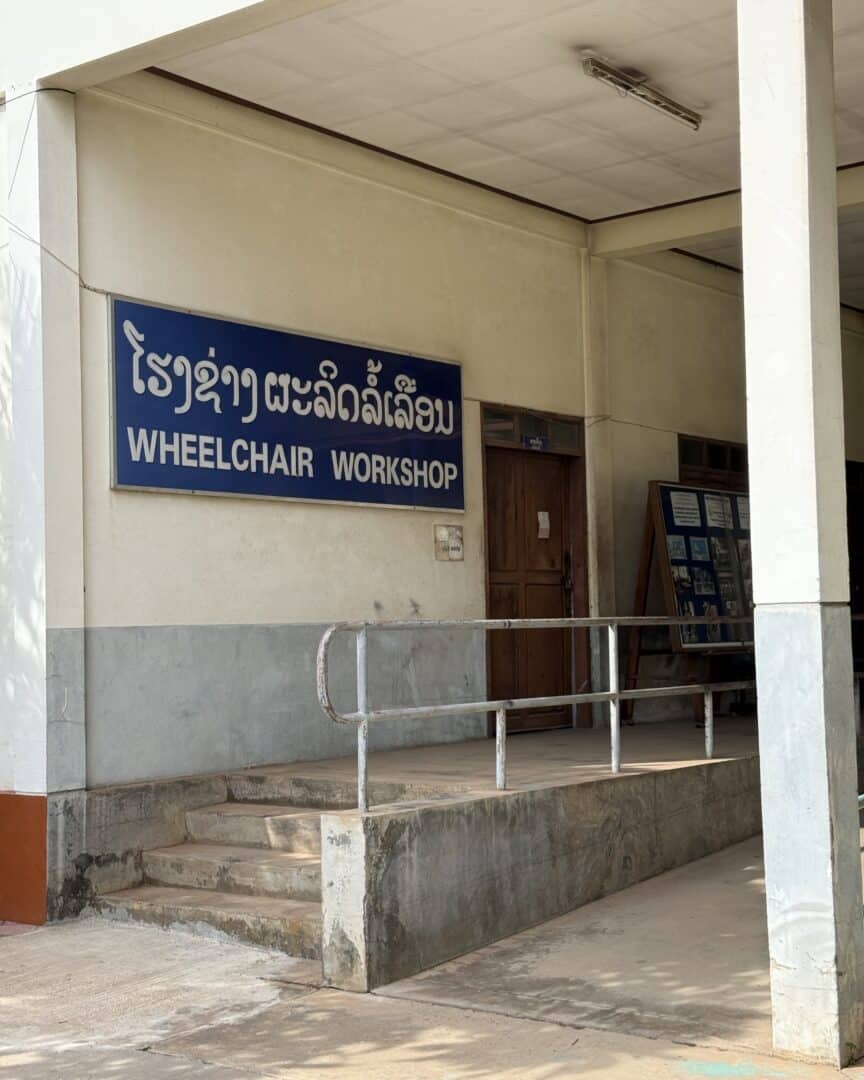
COPE Visitor Center
COPE’s mission is to help victims of UXOs. UXO stands for Unexploded Ordnance, which refers to military ammunition or explosives that failed to explode as intended. Thirty percent of the land in Laos is covered in UXOs, which can detonate and kill or injure the local farmers and their families. COPE helps them with prosthetic limbs and other assistive devices. The center is free to visit, but they do ask for a donation.
Pro Tip: The COPE Visitor is very similar to the UXO Lao Visitor Center in Luang Prabang, Laos. Although it is nice to support both causes, you do not have to visit both if you are short on time.
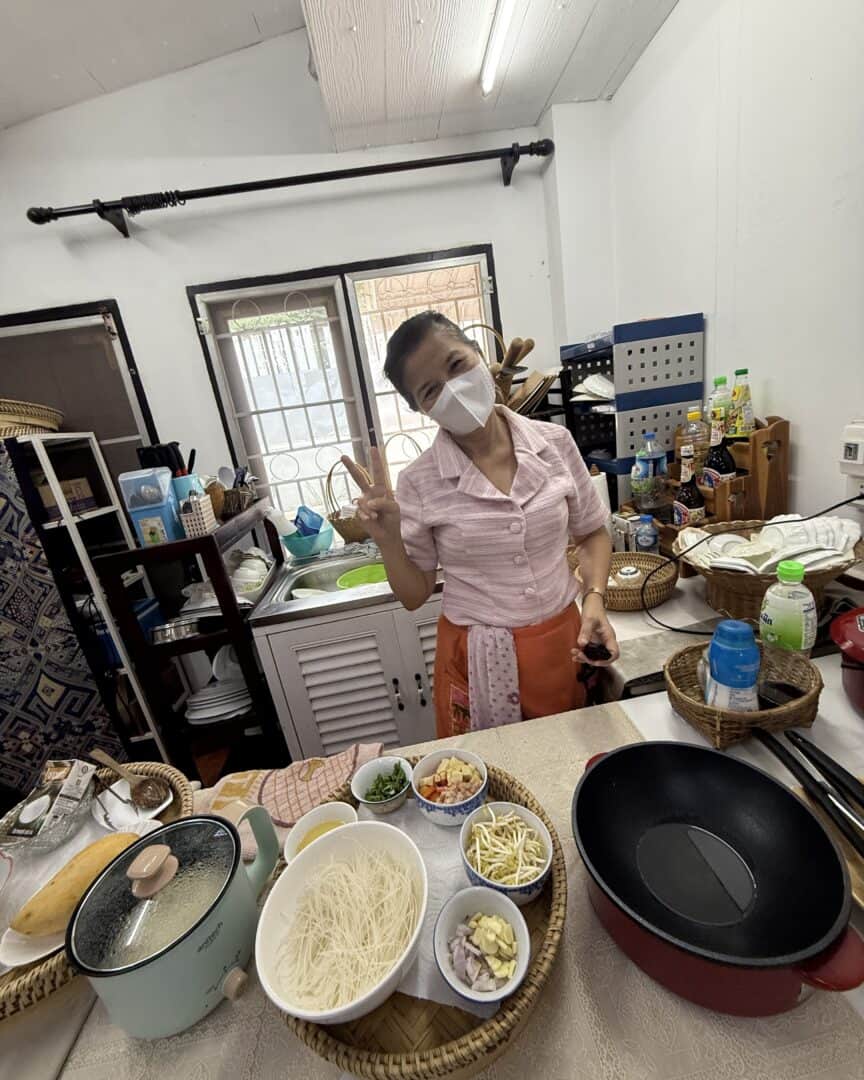
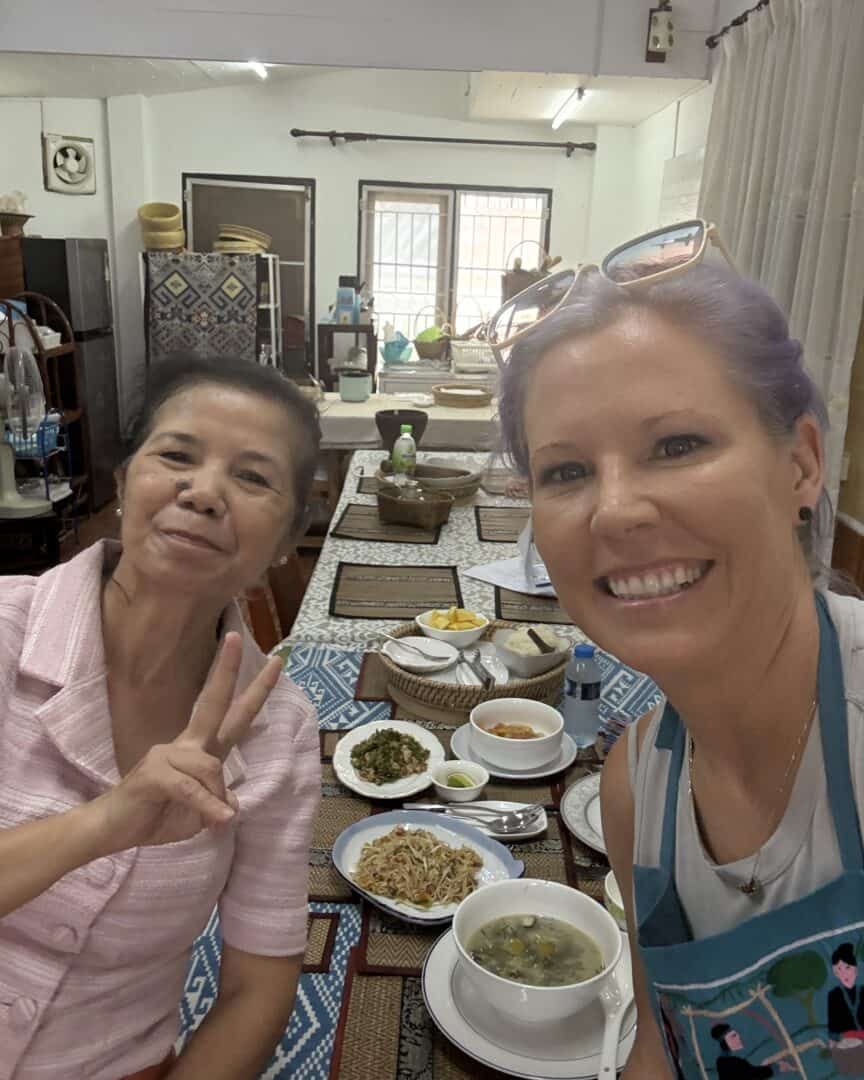
Madam Phasouk Vientiane Cooking Class
One of my favorite memories of Laos was taking a cooking class with Madam Phasouk. Highly recommend.
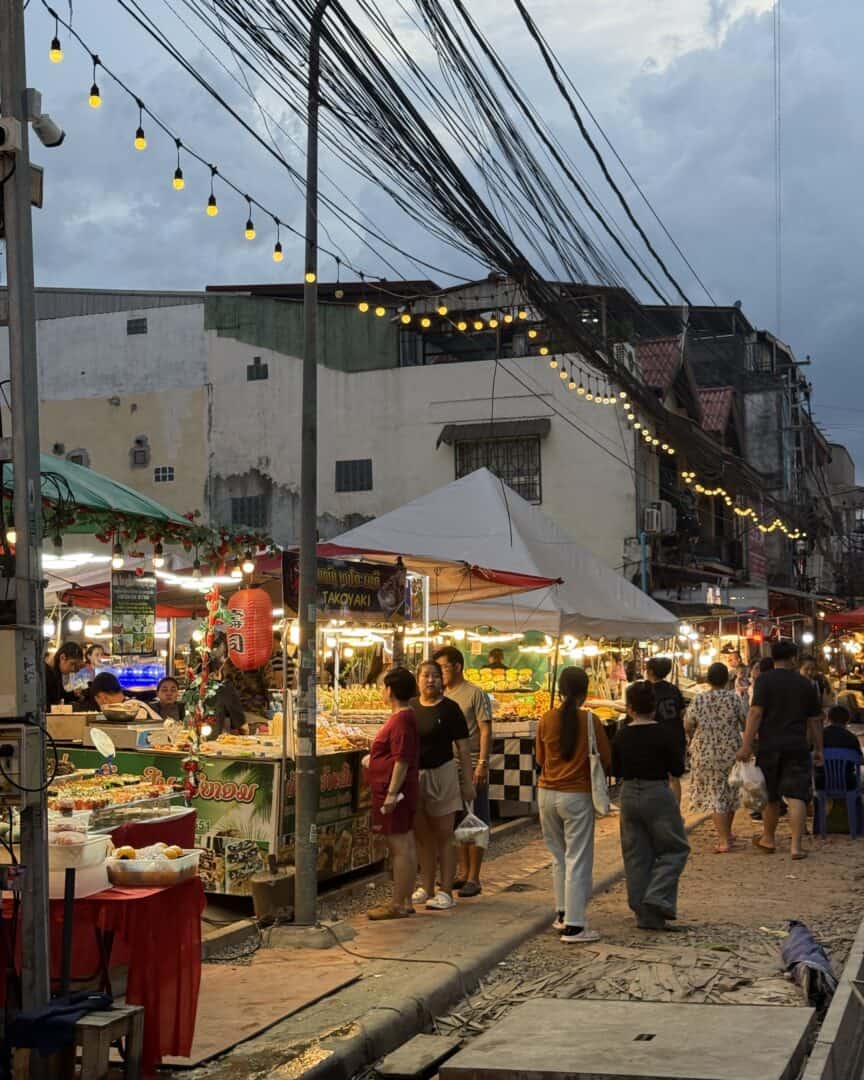
Night Food Market
A wide variety of food and very cheap. My go-to spot for dinner.
Night Market
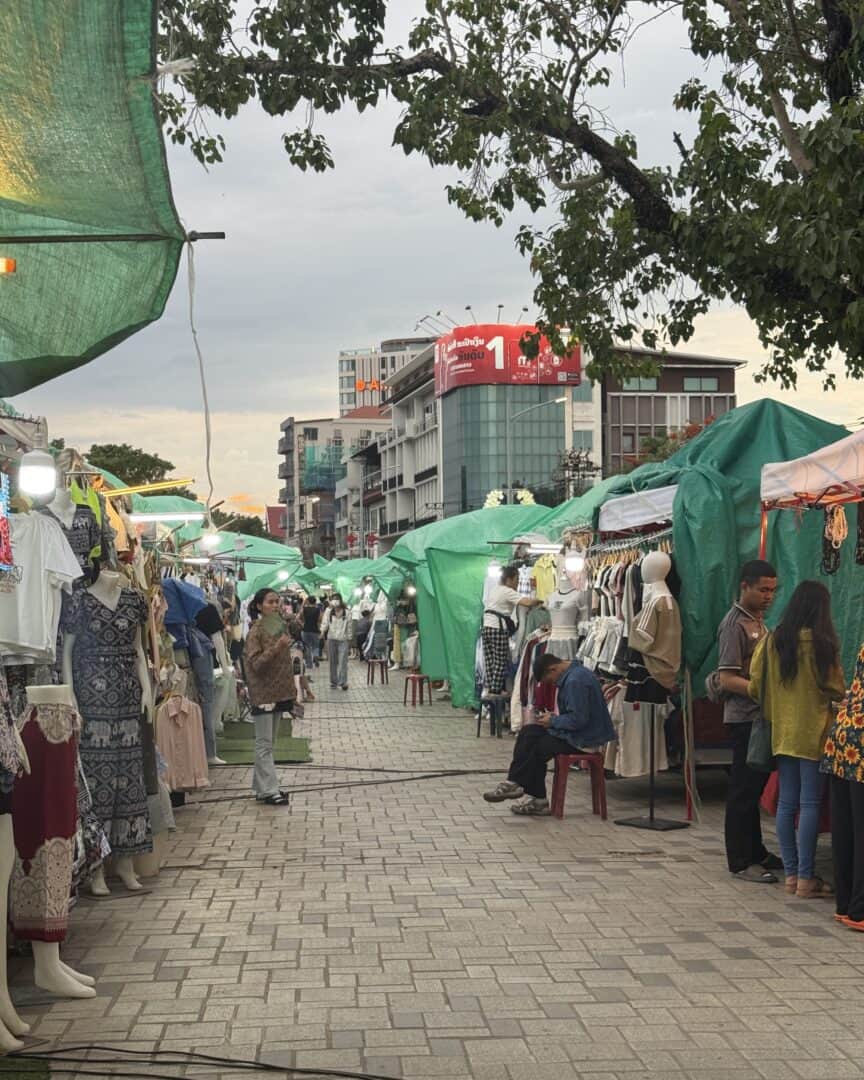
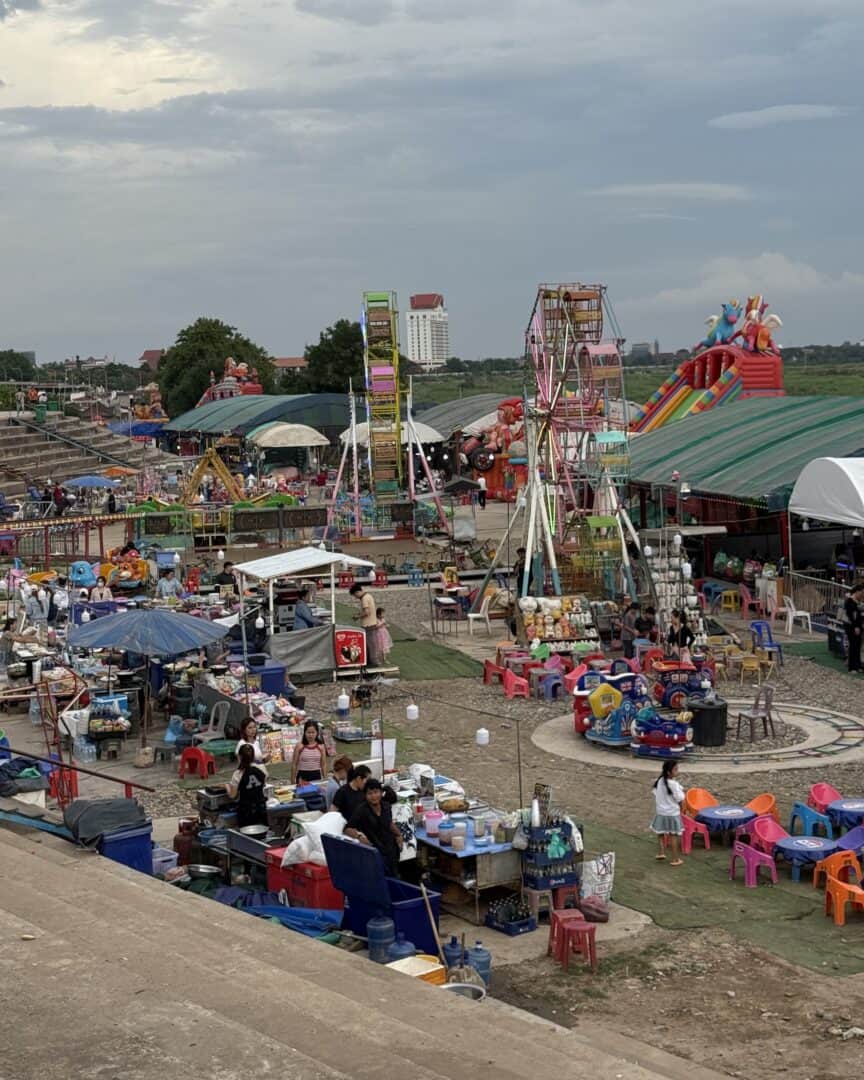
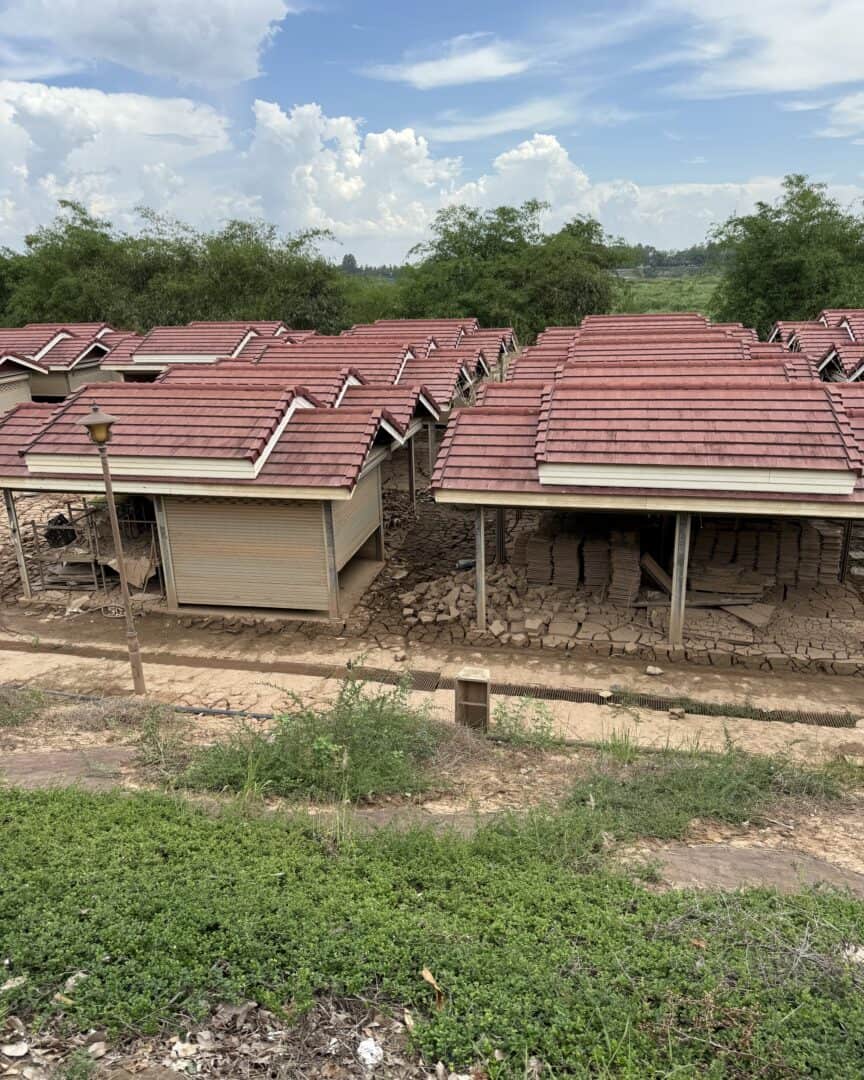
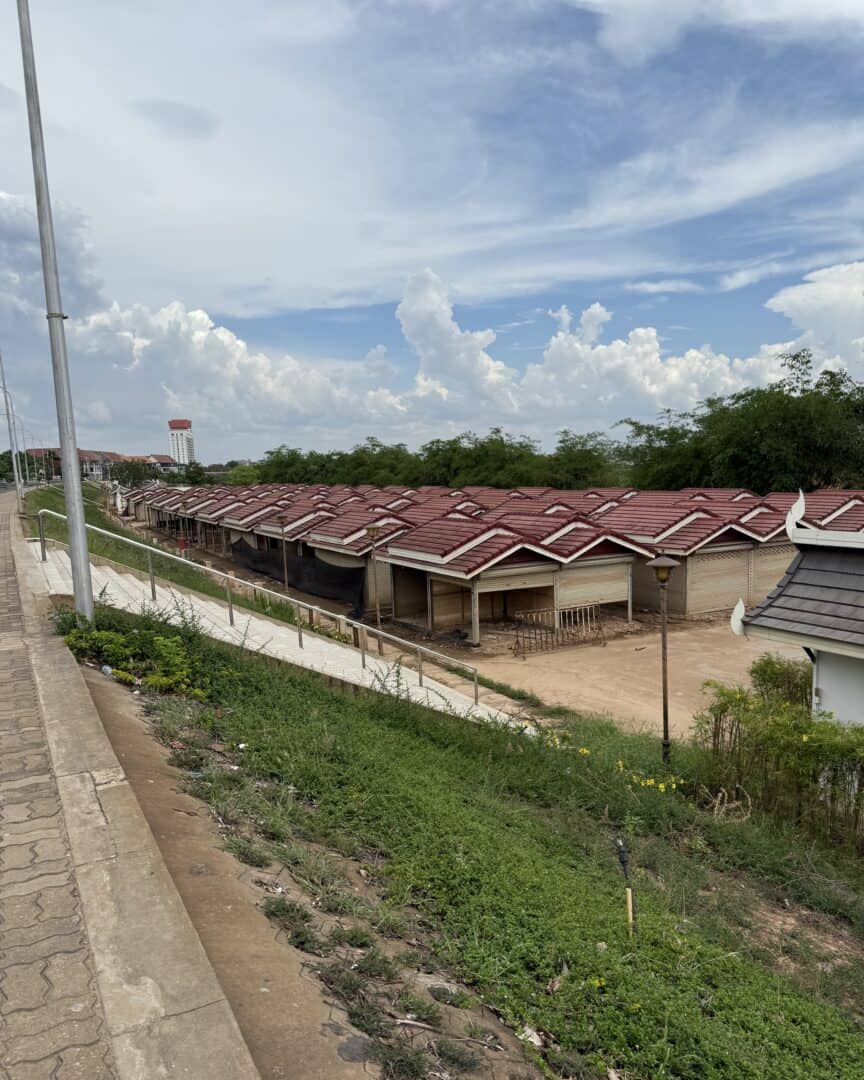
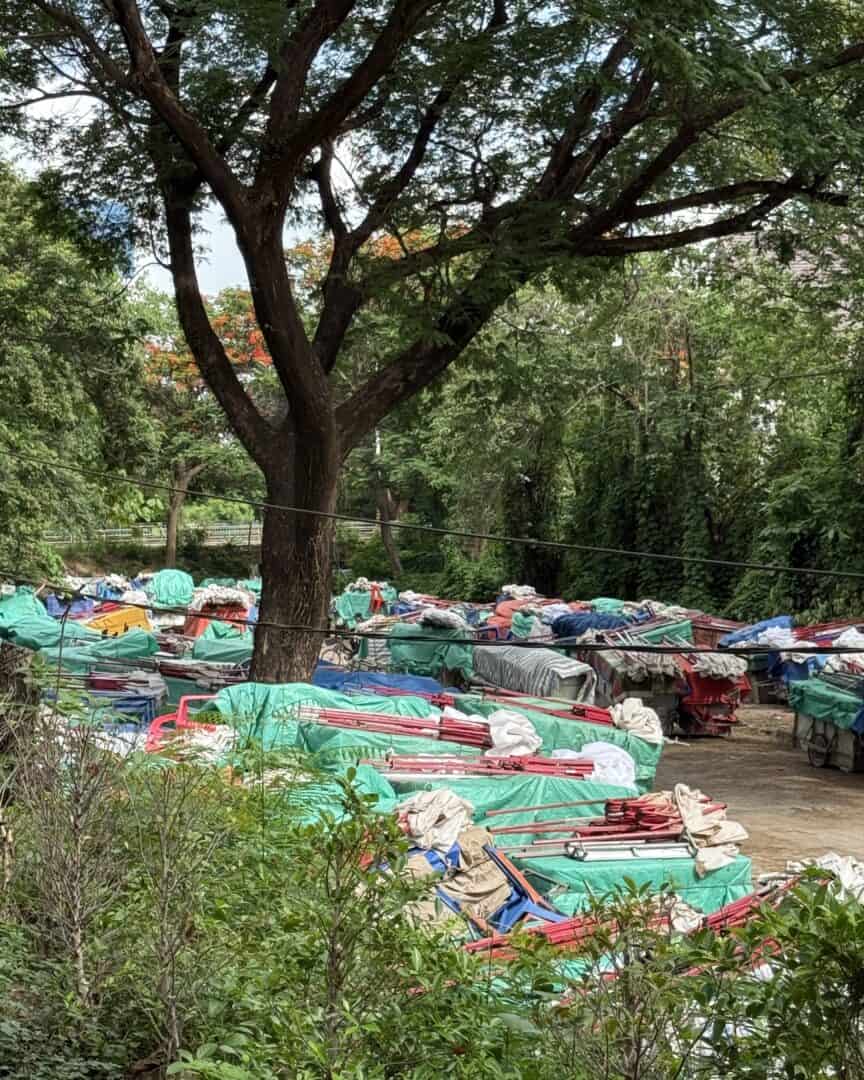
Sadly, the permanent red-roofed stalls of the night bazaar sustained damage from flooding and were no longer in use. Instead, the stalls of the night market were temporarily set up each night and moved to a storage area during the day. The majority of the vendors were selling clothes and accessories.
Walk along the Mekong River
There is a paved “boardwalk” along the river. When I was there, the water was low, and the water’s edge was actually about a 5-minute walk down a dirt path. The waterfront was very peaceful during the day, but came alive at night with food vendors, the night market and even a children’s carnival.
Extra travel tips
- There are ATMs everywhere.
- As with many places in Southeast Asia, the shops and restaurants open later in the day. The city comes alive at night.
- As of June 2025, the city is doing major road work in the Ban Anou and Watchan areas. Expect it to be dusty, and you will definitely have to wash your feet when you get back to your hotel.
You should definitely put Vientiane, Laos, on your Southeast Asia itinerary. The laid-back vibe will be a welcoming change coming from the bustling streets of Bangkok, Hanoi or Ho Chi Minh.
Guide to Visiting Vientiane, Laos Read More »