Travel Planning

Guide to Antarctica

Guide to an Antarctica Expedition on the Ocean Albatros

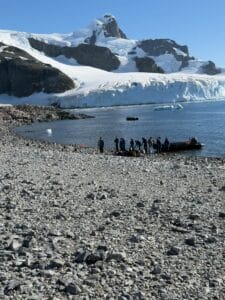
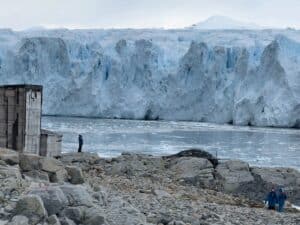
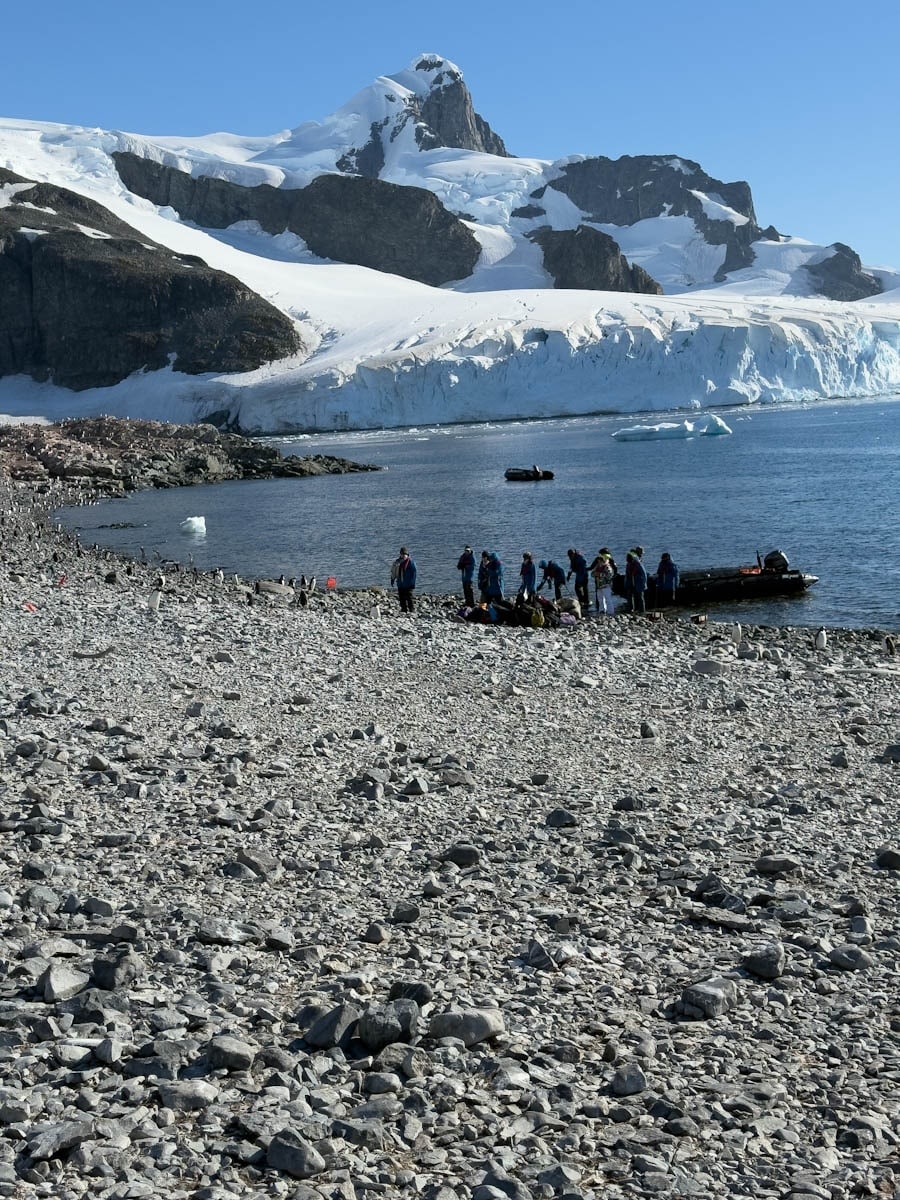
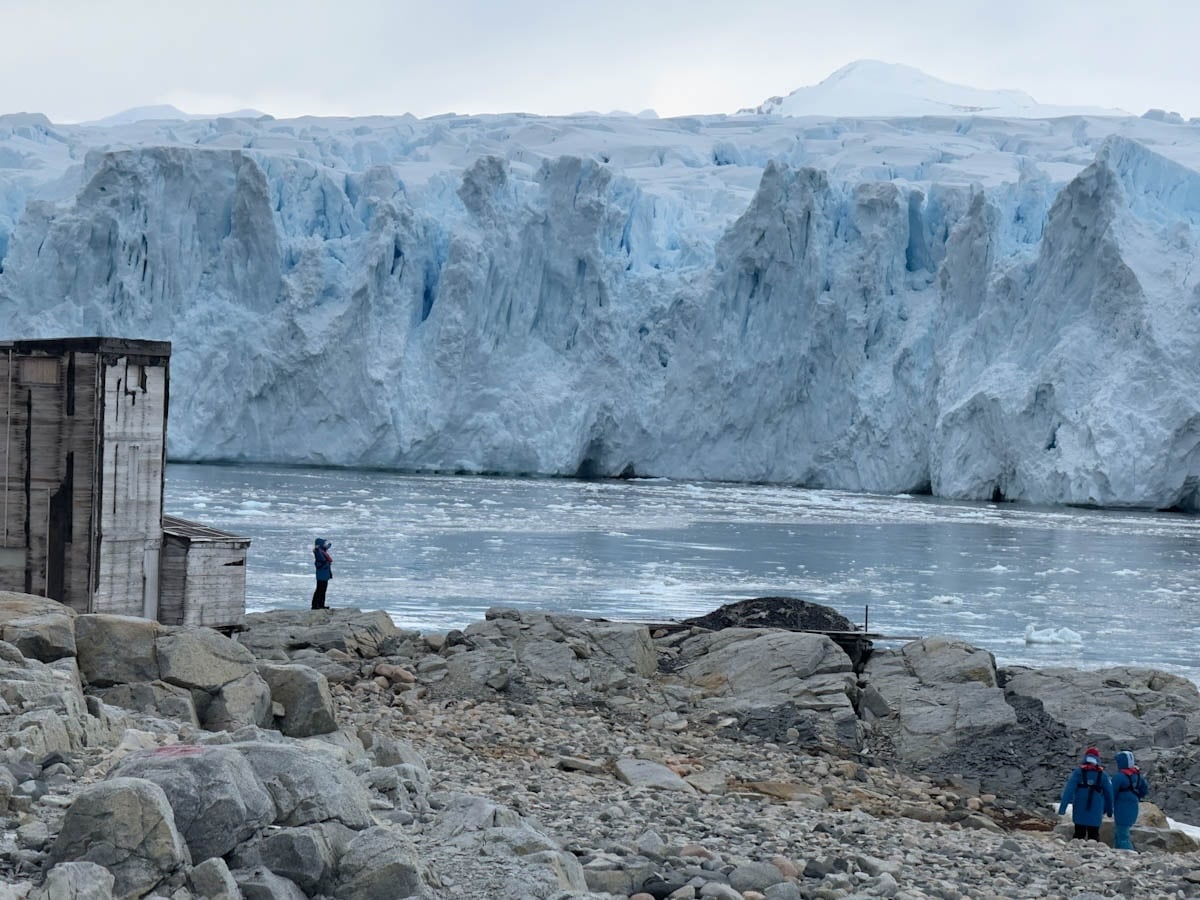
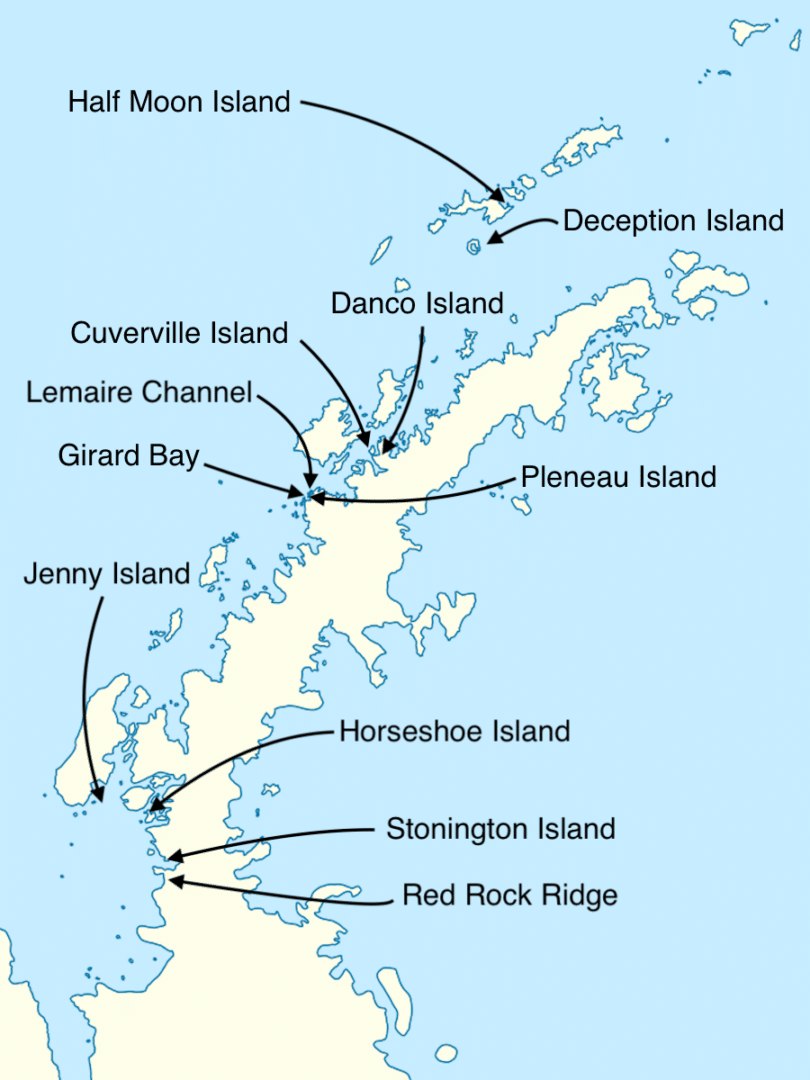
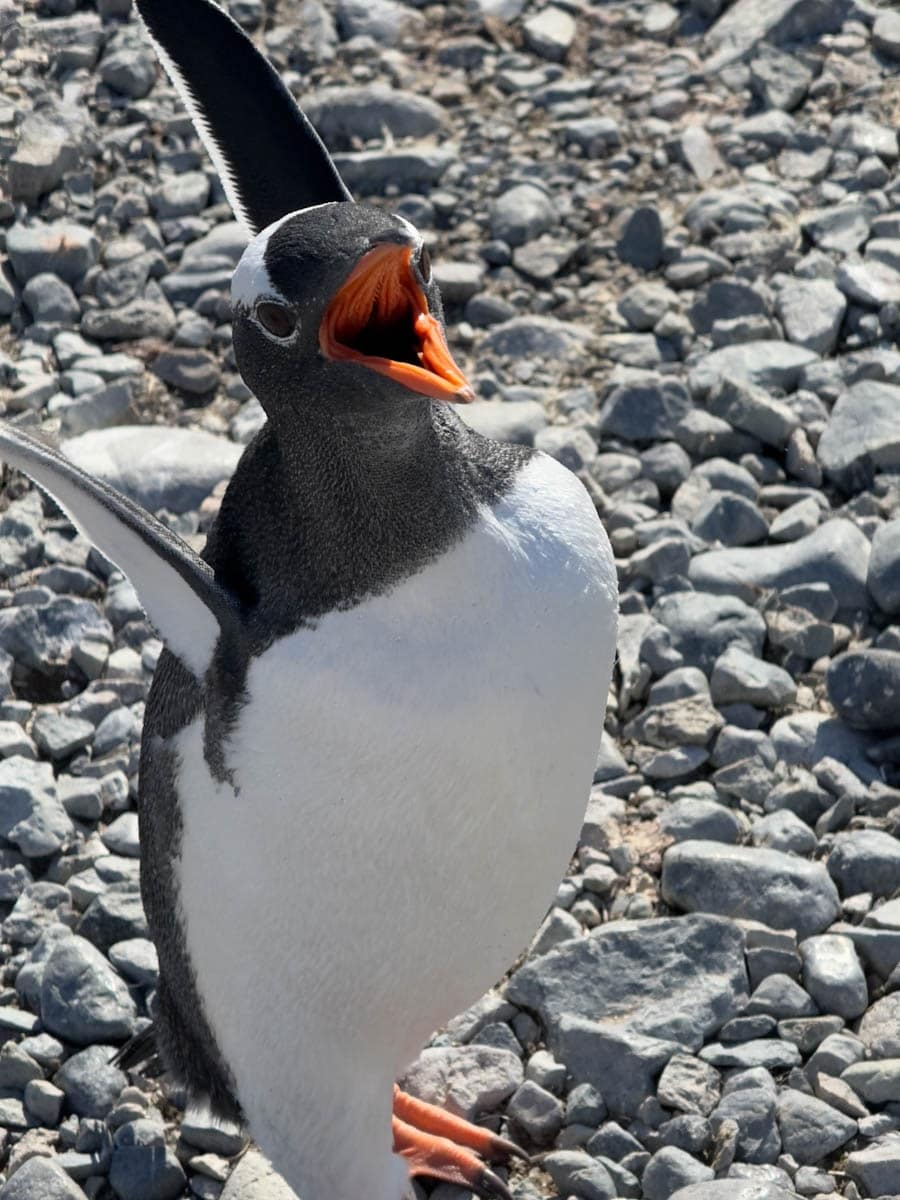
I recently traveled to Antarctica on the Ocean Albatros to celebrate my friend’s 50th birthday. We went on a twelve-day voyage with Polar Latitudes Expeditions, called Encounter the Antarctic Circle, from February 28 to March 11. We picked this trip because we wanted to cross the Antarctic Circle at 66 degrees south, which you can only do later in the season when there’s less ice. March is the last month of the tourist season before the ice comes back and the region has 24 hours of darkness. In winter, Antarctica’s landmass grows by 50% because of the ice.

If you’ve already booked your trip to Antarctica, or if you’re just curious about what it’s like, I’ve put together everything you need to know about an expedition to Antarctica. 

Itinerary
FAQ’s
Embarkation and the Drake Passage
Life Onboard
Dining
Packing List
State Rooms and Amenities

Itinerary

Before the cruise, people kept telling me to stay flexible, and they were right. Each evening, we got the plan for the next day, but not a single day went exactly as scheduled.

We were lucky with the weather—it was sunny most days, and the usually rough Drake Passage was calm. The conditions were so good that we traveled farther south than many of the staff had ever gone. In fact, it was the farthest our boat and captain had ever been. We made it to 68 degrees south.

Ocean Albatros Itinerary

Frequently Asked Questions

Guide to Antarctica Expedition on Ocean Albatros

Looking For More Information

Itinerary
FAQ’s
Embarkation and the Drake Passage
Life Onboard
Dining
Packing List
State Rooms and Amenities

Guide to an Antarctica Expedition on the Ocean Albatros Read More »

Road Trip Through Lithuania and Latvia

Exploring Lithuania and Latvia: Planning a Baltics Road Trip

The best way to see the Baltics is by car. There are so many unique hidden stops that are not accessible by public transportation. This summer, my boyfriend and I took a four-day road trip through Lithuania and Latvia. 

When it comes to scenery, the area reminded me of the Midwest US, corn fields after corn fields. Not the most excited, but I was also surprised by how many lakes and ponds there were. And each one we passed was full of locals enjoying the water. 

Logistics

Car Rental

We rented through Hertz online and picked up our car at Vilnius International Airport. We did not need an international driver’s license, but we did have to pay an extra fee to cross the border between Lithuania and Latvia.

Parking

This is the MOST important part of this guide.

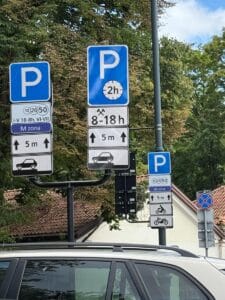
Parking was the most challenging thing in the whole process. There were several pay apps, but you needed a Lithuanian or Latvian phone number, and there were pay machines, but we could not get most of them to work. 

Save yourself all the trouble and download Unipark to find and pay for parking in the Balkans. 

Parking is by zone. You can park on the street (if parking is allowed) or in a lot in that zone for the same amount of money. The app will tell you the rules for each zone, and you can add extra time in the app. 

Road Condition

The roads are in good condition. It is easy to navigate, but I do recommend studying up on the road signs. Be careful of cars driving up the median during traffic.

Smoking

We noticed a lot of cars pulled over on the side of the highway, smoking. After Cliff pointed it out, I looked it up and learned that smoking in cars is banned entirely in Lithuania and banned when children are in the car in Latvia and Estonia.

Gas 

Gas stations were plentiful. Circle K was the most popular. In fact, it was more popular for its food. There was a line just for their sandwiches and hot dogs. We had trouble using our credit card at the pump. It wanted a chip and pin card, which we didn’t have. Just bring cash. Pump first, then pay inside.

Stops

We started in Vilnius, Lithuania and drove to Riga, Latvia, then back. Check out my map for even more unique attractions.

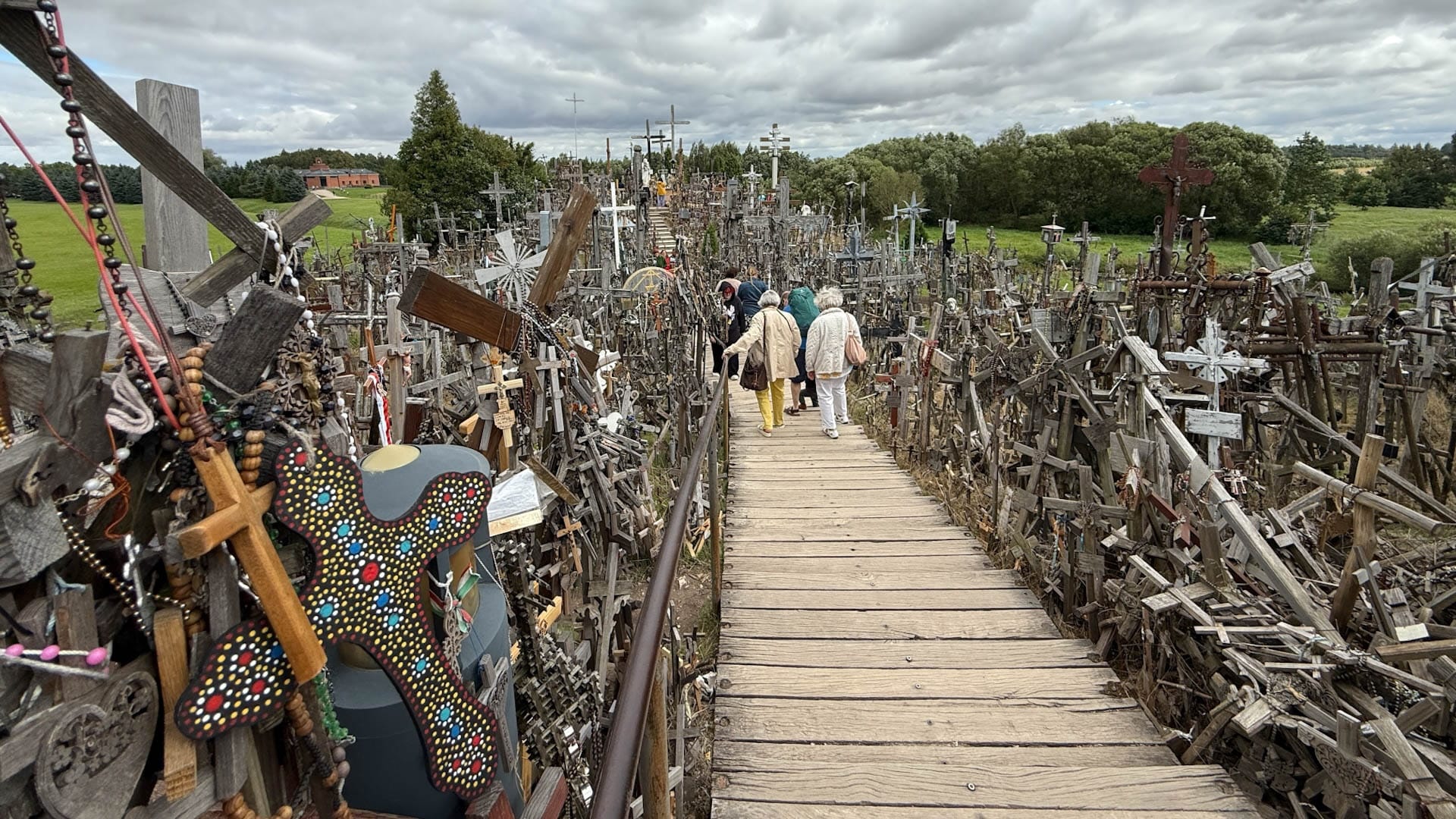
Hill of Crosses Šiauliai, Lithuania

The Hill of Crosses is said to have been established around 1831. It was destroyed by the Soviets three times, but people continue to bring the crosses. I had read that it was pretty unimpressive, and we almost didn’t stop, but I am glad we did. It doesn’t look like much from the front, but it is huge. 

If headed from Latvia, there is an official parking lot on the left of the road with a souvenir shop, but I recommend driving past this and parking along the road on the right. It is a quicker walk and you can avoid the tourist buses. 

Padaliai-Čiobiškis Ferry Čiobiškis, Lithuania

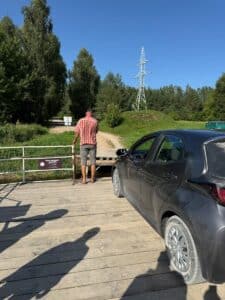
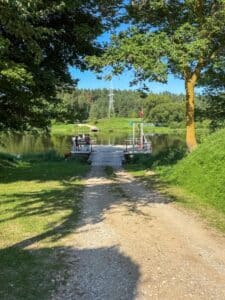
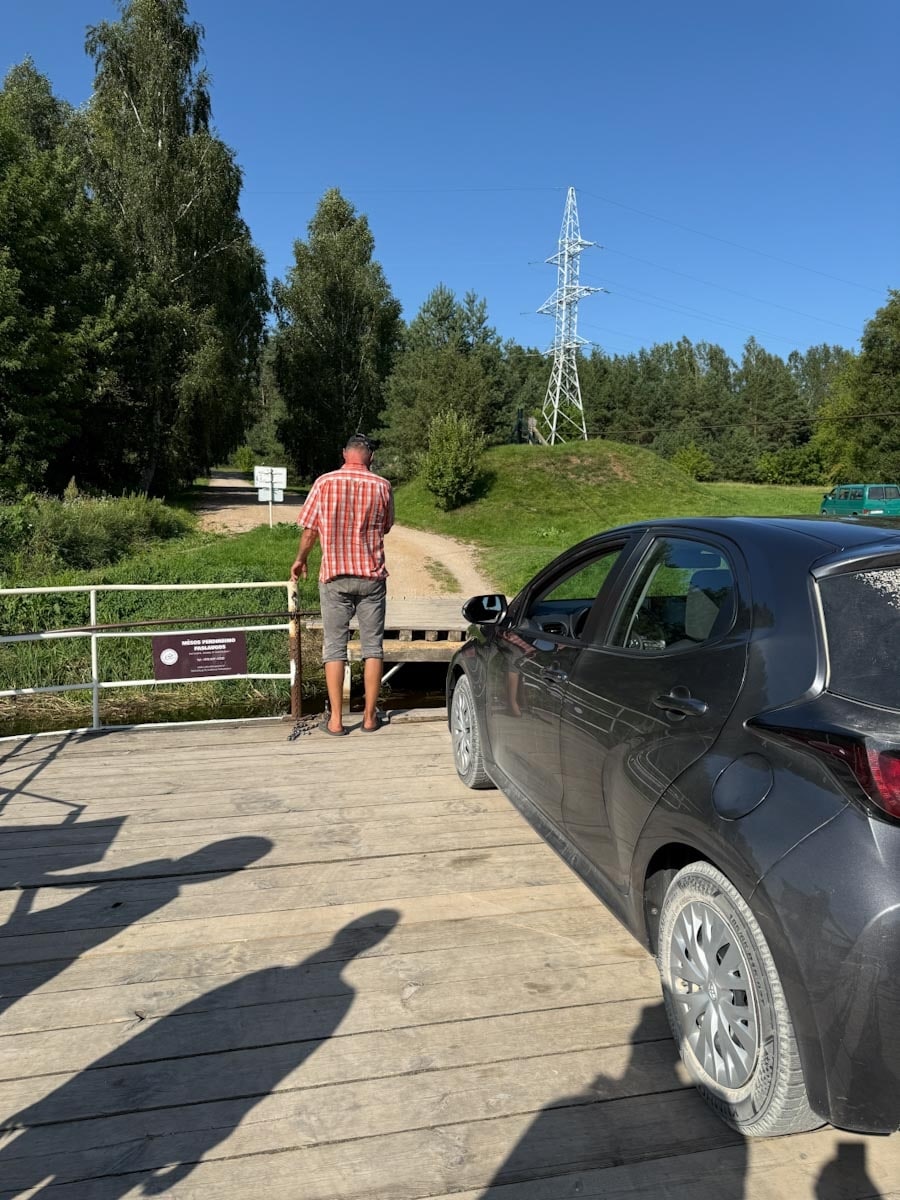
I love weird, unique things, and this was my favorite find. This was a river-powered ferry across the Neris River. Since the early 1900s, there had been several ferries and even permanent bridges connecting both sides, but they had been demolished during times of war. In 1990, a local man, Gediminas, purchased the ferry and restored it.

I only had a waypoint on Google Maps. I didn’t know if it was still in operation or what the hours were. We got off the main highway and headed into the corn fields. We quickly ended up on a dirt road. Finally, after about 6 miles, we found it. Gedminias and his family run the ferry from spring to early fall. We paid 8 euros for two people and one car. The ferry ride takes less than five minutes.

Trakai Island Castle Trakai, Lithuania

The Castle was built in the 14th and 15th centuries and was the royal residence for the Grand Duke of Lithuania. Beautiful Lake Galvė surrounds it. 

We did not expect this to be as touristy as it was, but we were also there on a holiday. You can rent a boat or a paddleboard to explore the lake. There were food and souvenir stands lining the lake and the path to the castle. You need to pay an entrance fee to get into the castle, but you can walk around the grounds for free. 

Parking was a free-for-all. The residents in the area were using their yards for parking. We were able to find a spot in a resident’s yard for 5 euros. 

Aleksotas Funicular Railway Kaunas, Lithuania

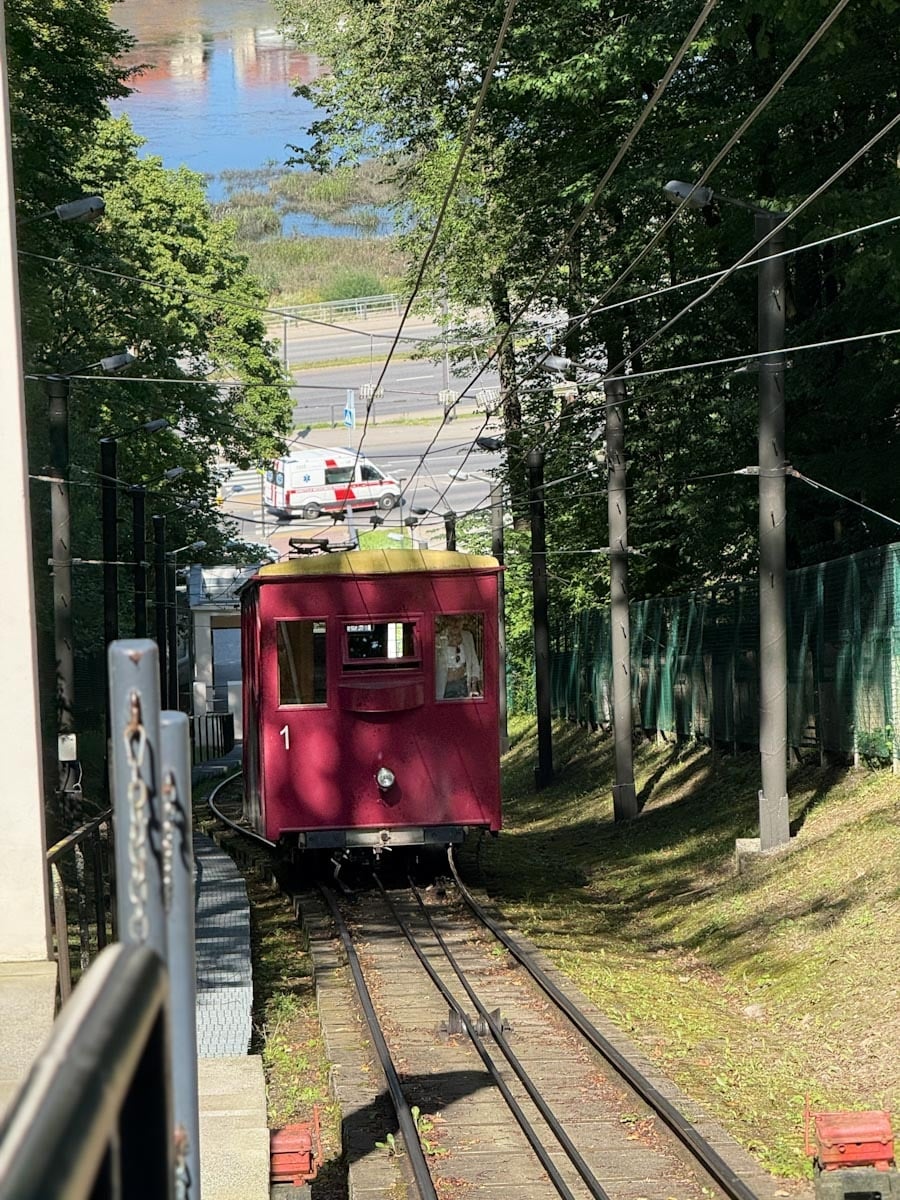
Since 1935, the funicular has been used by locals to avoid the uphill trek. At an inclination of 18 degrees, the ride takes you 436 feet in 4 minutes.

After crossing over the Aleksot bridge out of town, there will be a parking lot on the right at the base of the tram. It is best to take this five-minute ride up and then walk down the path next to the track. You can pay on the train. 1 euro one-way.

Check out my guides to Riga, Latvia and Vilnius, Lithuania. 

Exploring Lithuania and Latvia: Planning a Baltics Road Trip Read More »

Unusual Things to do in London

15 Unique and Unusual Things to Do in London

I like finding unique and unusual things to do when I travel to a new place, the more off the beaten path, the better. On a recent trip to London with my boyfriend Cliff and cousin Emily, we skipped the usual sights and explored the city’s less-known side. From Diagon Alley to underground bars, these hidden gems helped us dodge the tourist crowds. Check out my map of all our favorite spots.

Mayflower Pub

The Mayflower Pub looks out over the spot where the Mayflower once docked before leaving for the New World. I grew up near Plymouth, MA and drove by the Mayflower 2 and Plymouth Rock regularly, so we had to visit. Other than the name, the only clue about the bar’s history is a small sign. The pub has a small outside deck and, since it’s not near the big tourist spots, it’s a great place to get away from the crowds.

Trafalgar Square Imperial Measurements 

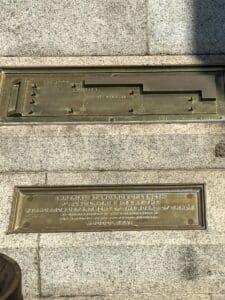
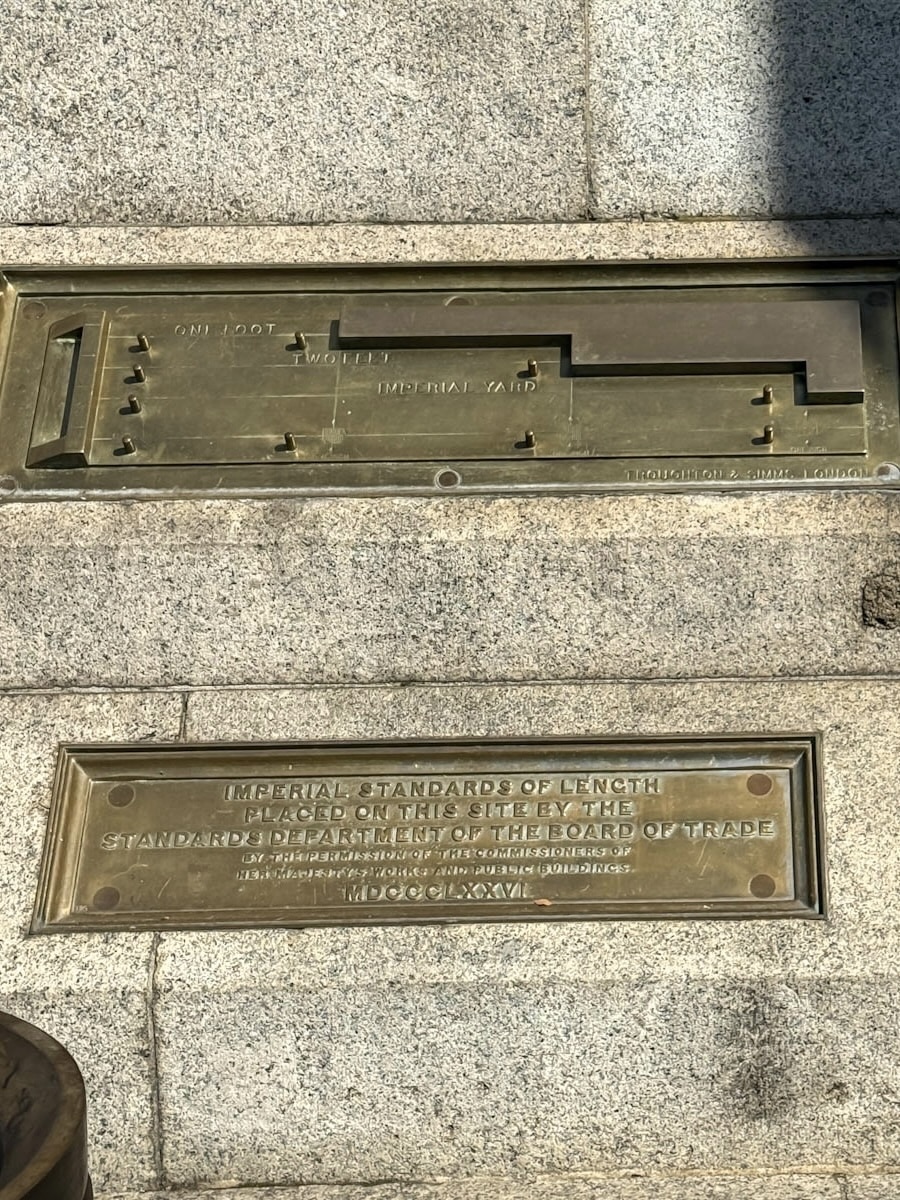
Trafalgar Square is one of the busiest tourist spots, but most people walk right over the plaques showing different imperial measurements. Throughout the square, you can find scale models of inches, feet, and yards, as well as the less familiar chains, perches, and poles.

Graffiti Tunnel

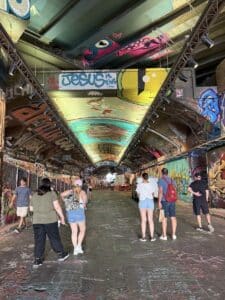
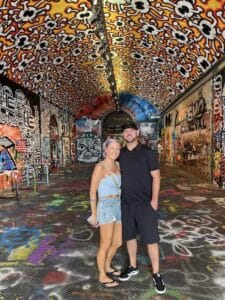
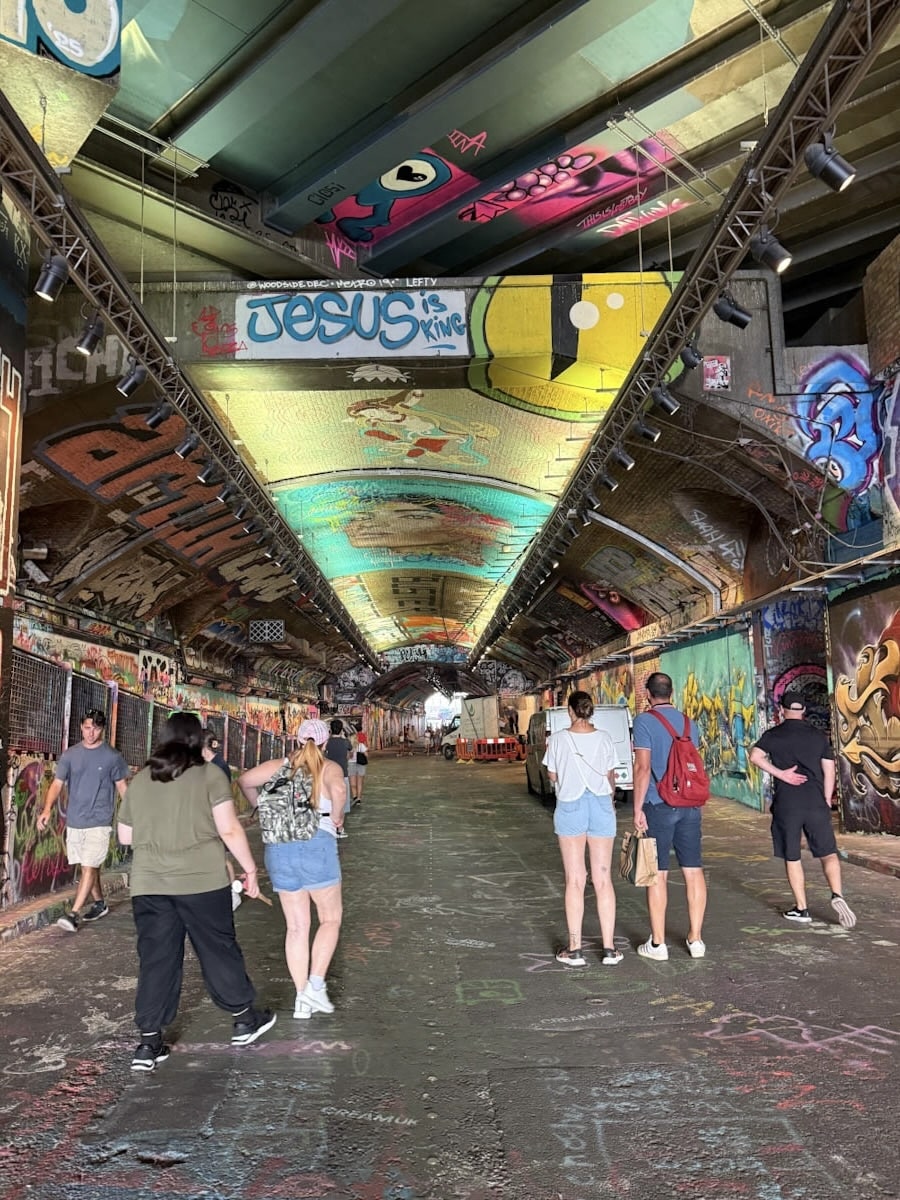
The Graffiti Tunnel is under Waterloo Station. We expected a run-down alley with ordinary graffiti, but instead found amazing street art. If you go later in the day, you’ll also find several bars and restaurants inside the tunnel.

BrewDog Waterloo

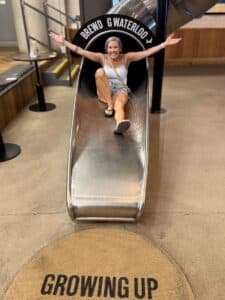
We discovered this brewery after leaving the Graffiti Tunnel. The two-story space includes a restaurant, coffee shop, coworking space, and bowling. Not only that, but there was even a 2-story slide to keep me entertained while my parents—oops, I mean Cliff and Emily—enjoyed their food.

Hungerford Footbridge Skateboard Graveyard

Said to honor a skateboarder who was murdered near the bridge, the graveyard is basically a collection of skateboards that people toss onto a bridge pillar. It gets cleaned up frequently, and although Google Maps said it was closed, a few boards remained during our visit. It’s hit or miss, but since it’s close to the Graffiti Tunnel, it’s worth checking its current state.

London’s Famous Black Cabs

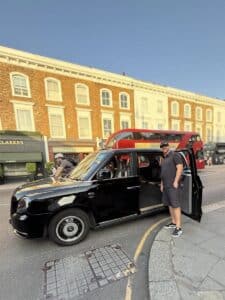
Cliff is a simple man. His two requests when we planned our trip to London were to drink beer in a pub and to ride in one of London’s famous Black Cabs. 

A London Taxi driver isn’t just any driver. To become one, you have to pass The Knowledge of London, one of the hardest tests in the world. Drivers must navigate 25,000 city streets without a map or GPS and name every big building and landmark. If you don’t want to hail a cab on the street, you can arrange a ride in a Black Cab using the Taxiapp UK app.

Cahoots Underground – 1940s Cocktail Bar

We love speakeasies, so it was no surprise that we ended up at Cahoots Underground twice. There are two Cahoots in the same place: Underground and Ticket Hall. Underground has the classic speakeasy vibe.  Though you usually need a reservation, we were able to walk in on a weekday and get a table.

Victorian Penny Chute – House Charity Alms

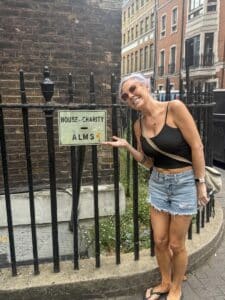
On the black railing is a small collection box with a slot and the words, ‘House of Charity, ALMS.’ This sign is fixed to a metal pipe. When people drop coins in, they roll down a tube and end up in a box in the building’s basement. This setup is called a penny chute, and it collects donations for the House of Saint Barnabas charity, which used to be in this building.

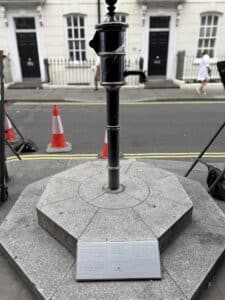
Broad Street Cholera Pump

The pump stands on a busy street, and most people probably just see it as an annoying pipe in the way. However, it was actually the source of a cholera outbreak in 1854.

Dr. John Snow was able to trace the source of the outbreak back to the water supplied from the Broad Street pump and discovered it was feet from an open cesspool, supporting the theory of water-borne diseases. 

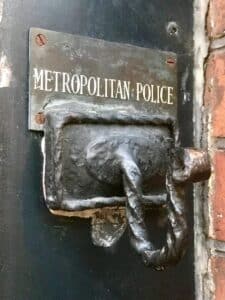
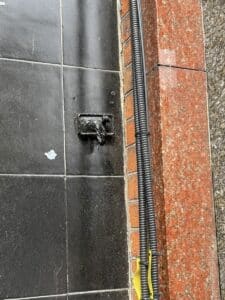
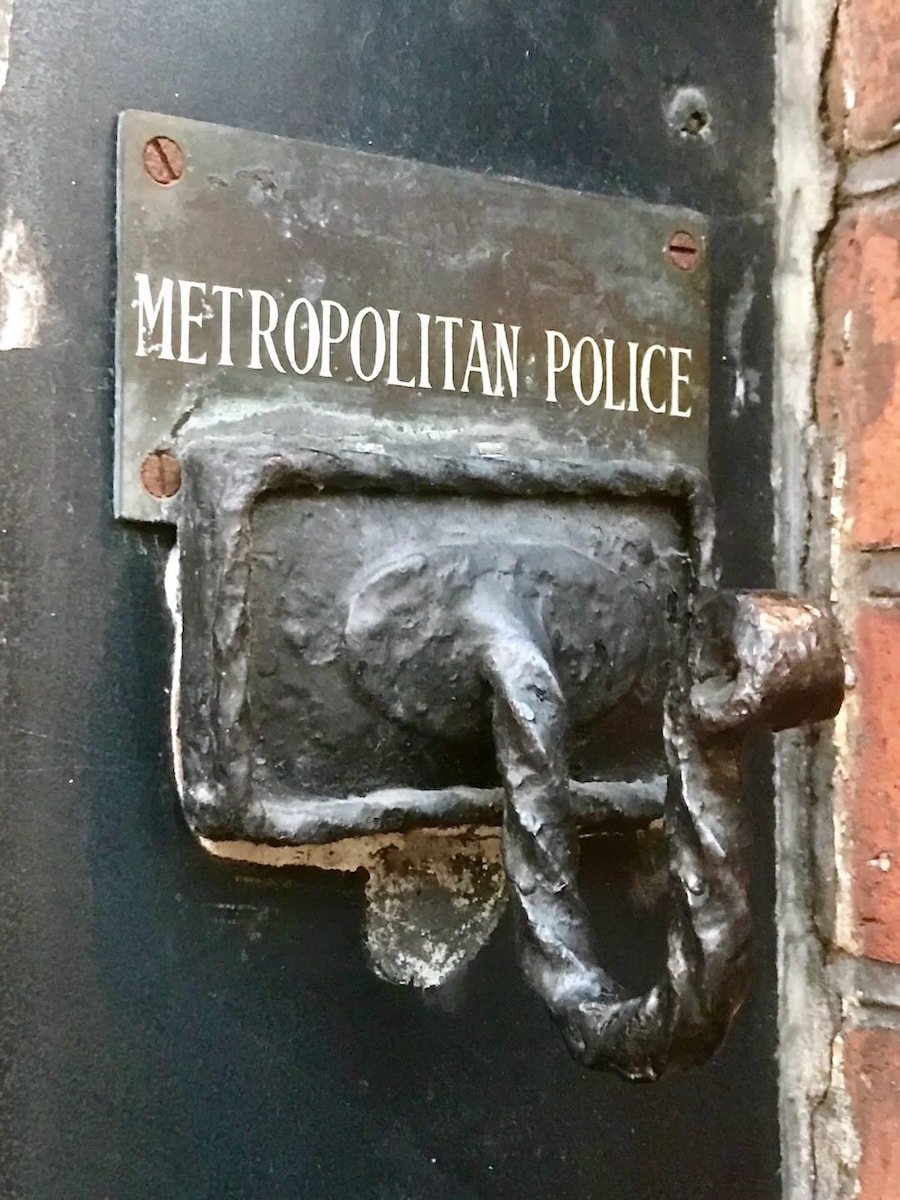
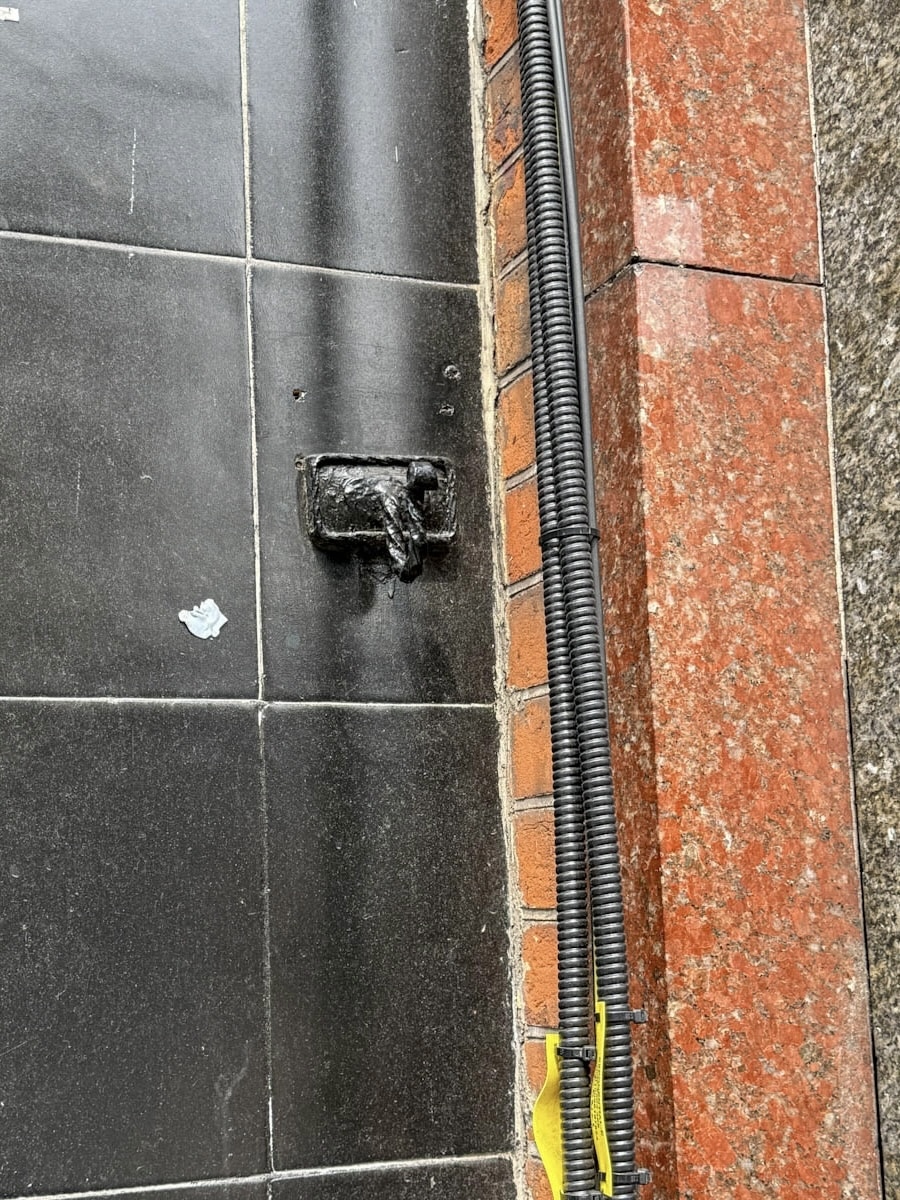
Metropolitan Police Coat Hook

Originally, it was a permanent hook for the police to hang their hats. Sadly, the hook is still there, but the sign is gone. While it was a bit of a letdown, it’s still a cool story and worth the hunt.

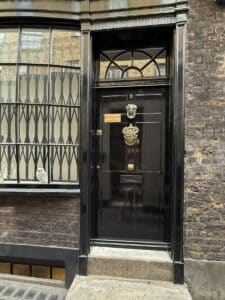
Goodwin’s Court

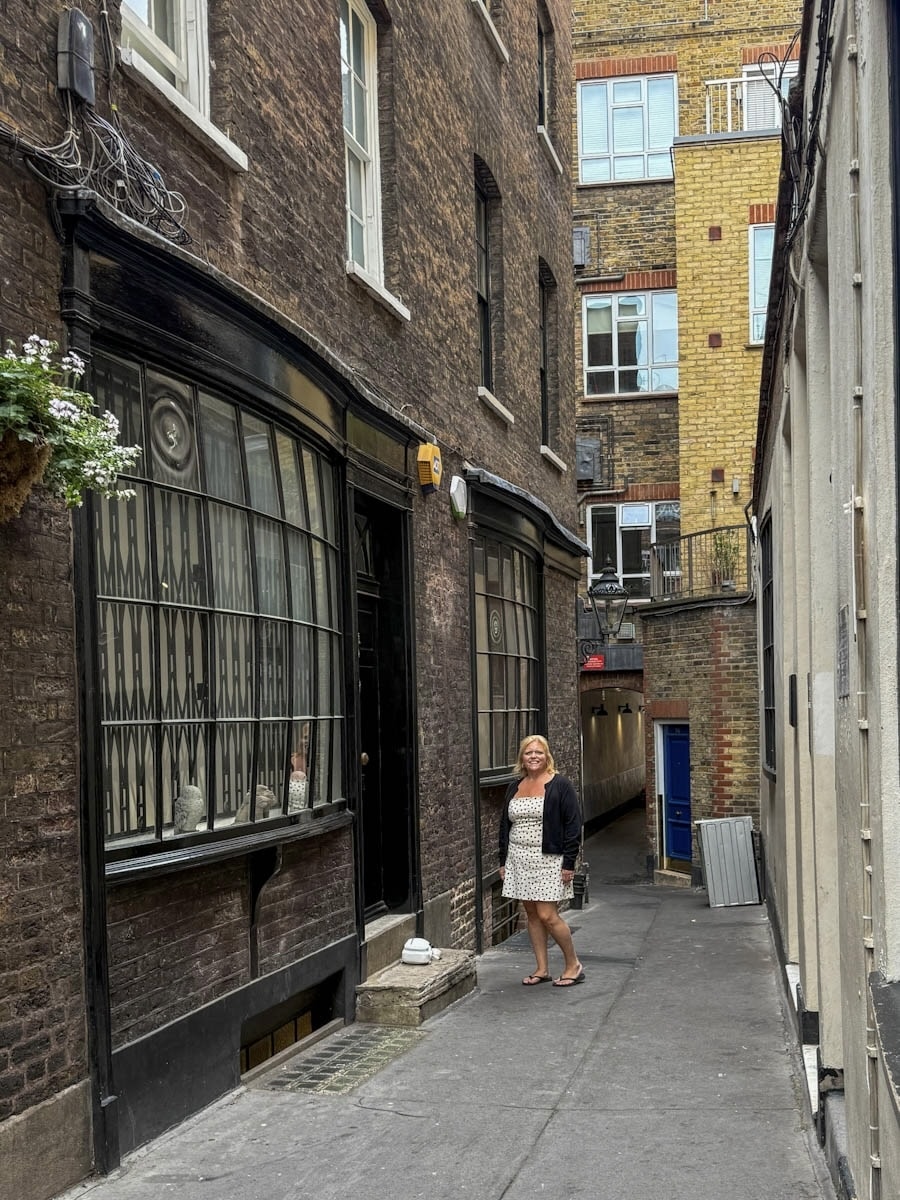
We walked by this small alley twice before finding it. Goodwin’s Court was on my list because it was said to look like a classic old London street. When we got there, we saw several Harry Potter tours going on and learned that Goodwin’s Court was an inspiration for Diagon Alley. We even found Harry Potter’s door with Hedwig in the window.

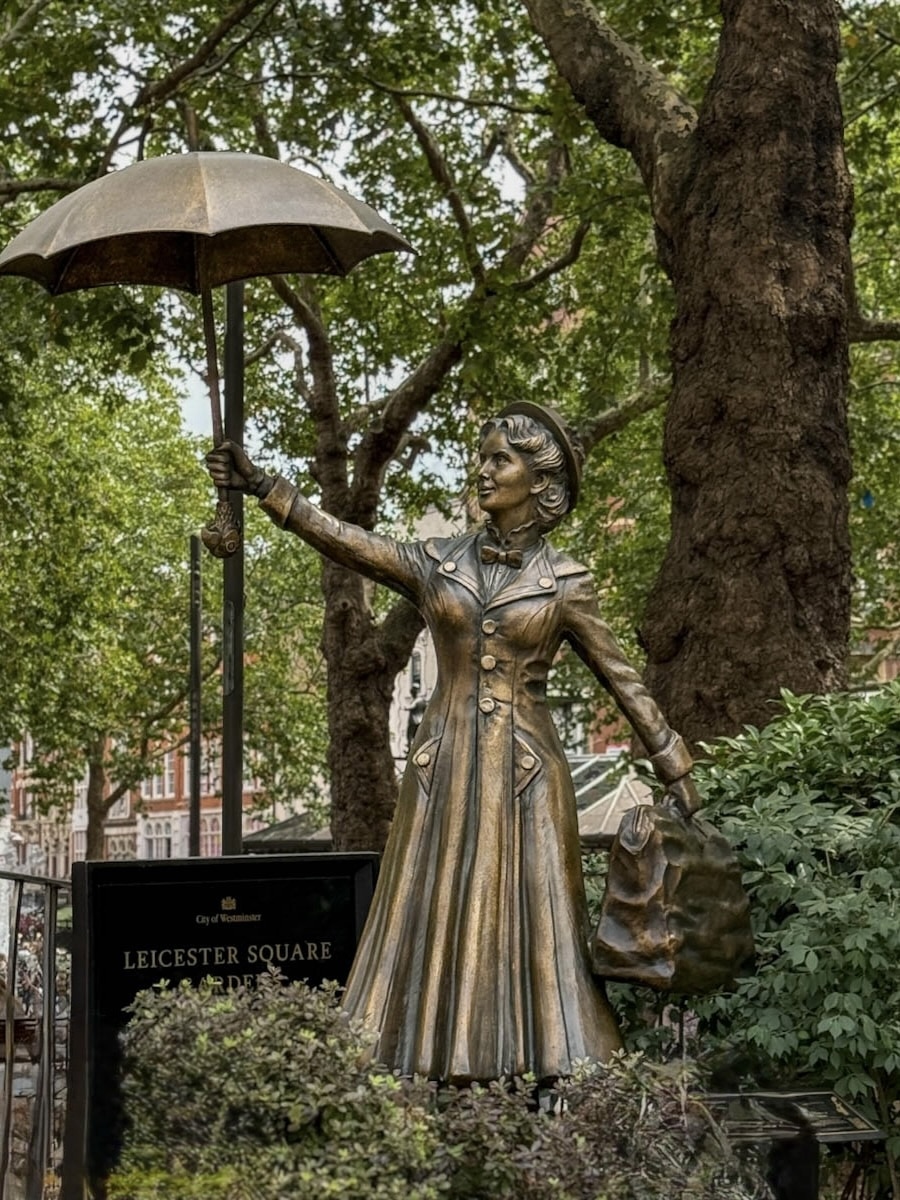
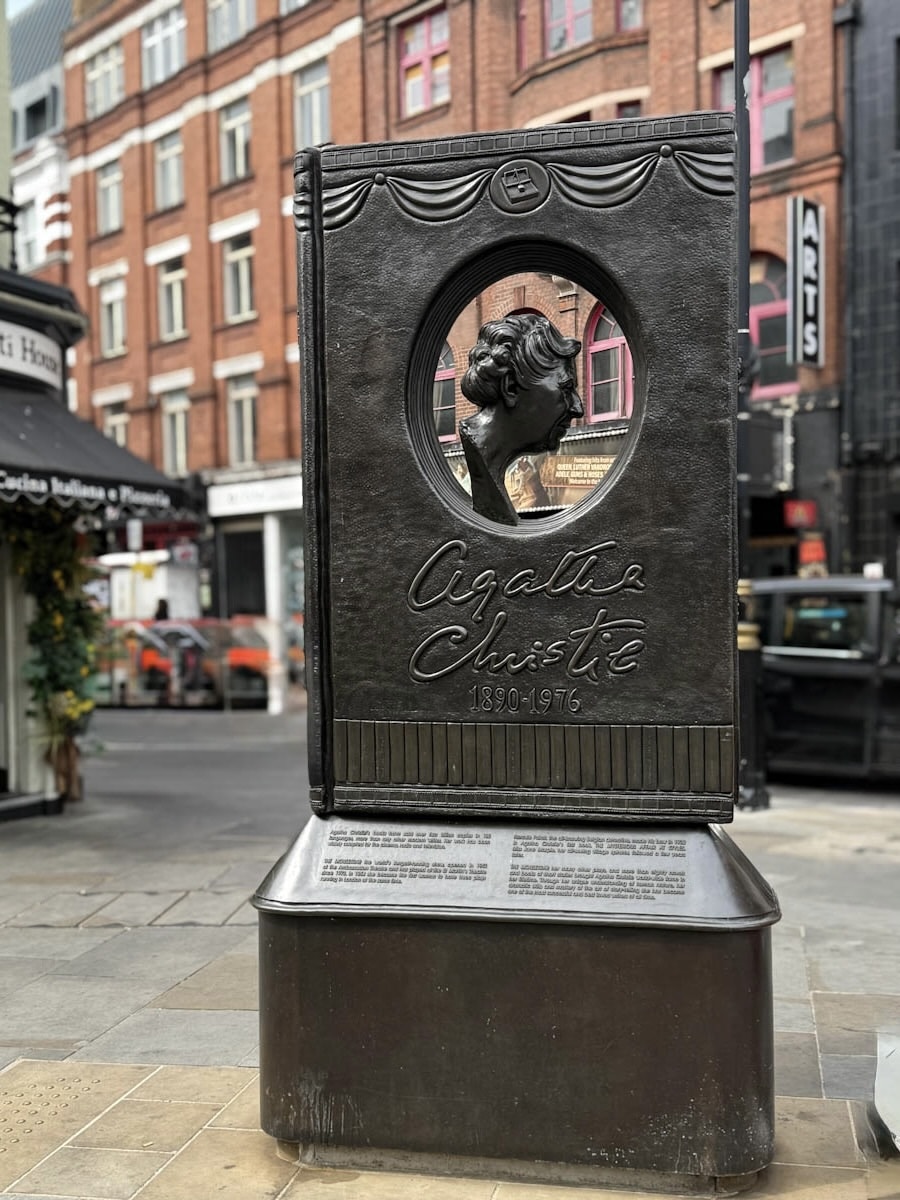
Mary Poppins and Agatha Christie

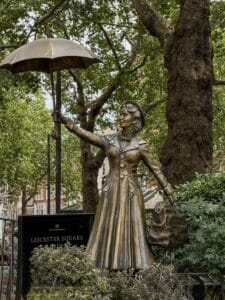
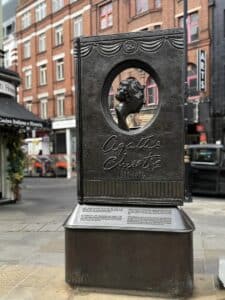
You can find statues of the famous magical nanny and your mom’s favorite mystery author near Leicester Square.

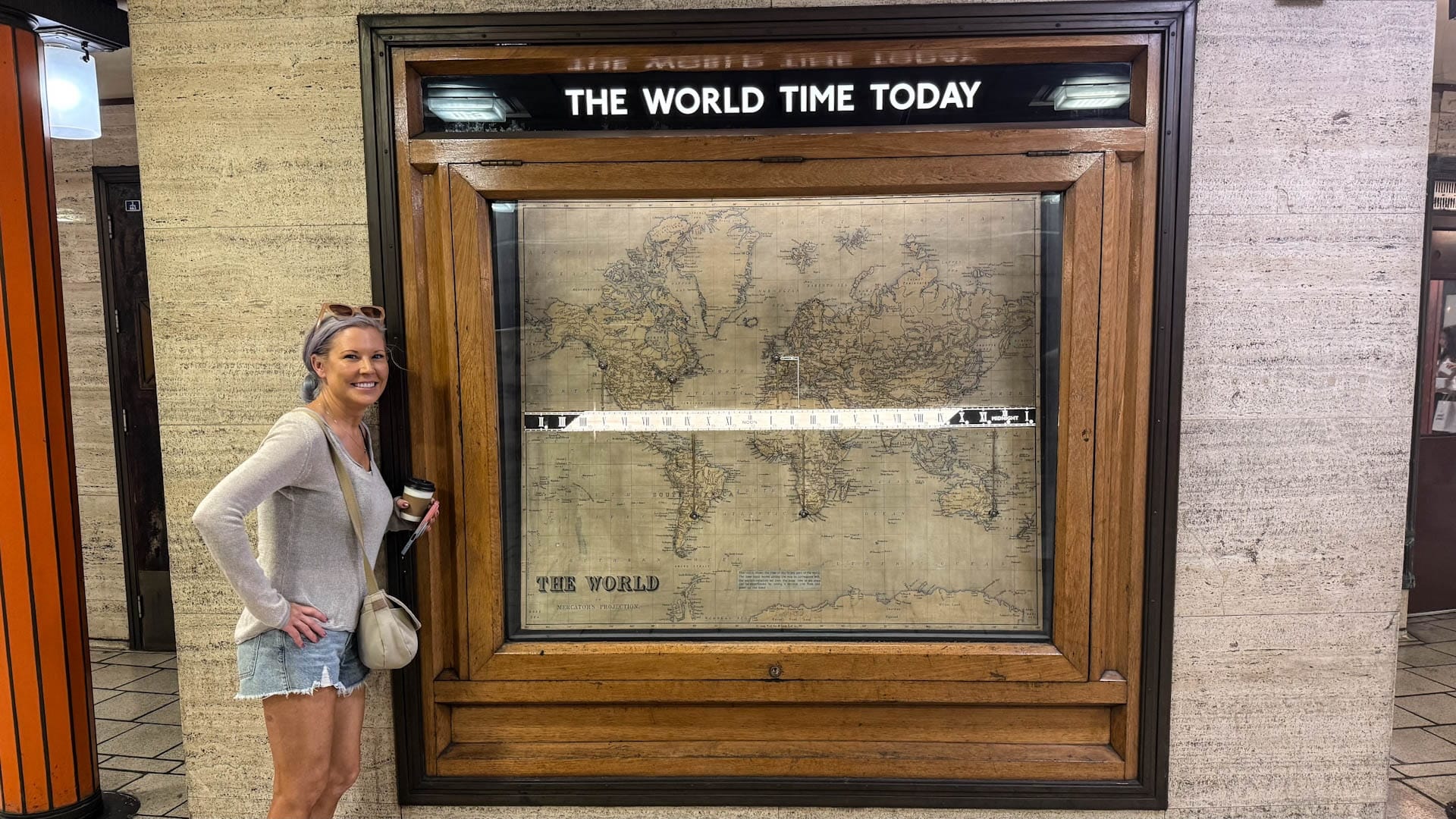
The World Time Today

This world map, built in 1928, has a line across the equator that shows the time across the world. It’s also fun to see what the world map looked like in the 1920s.

Even though it’s in the Piccadilly Circus Underground Station, you don’t need a train ticket to see the clock. 

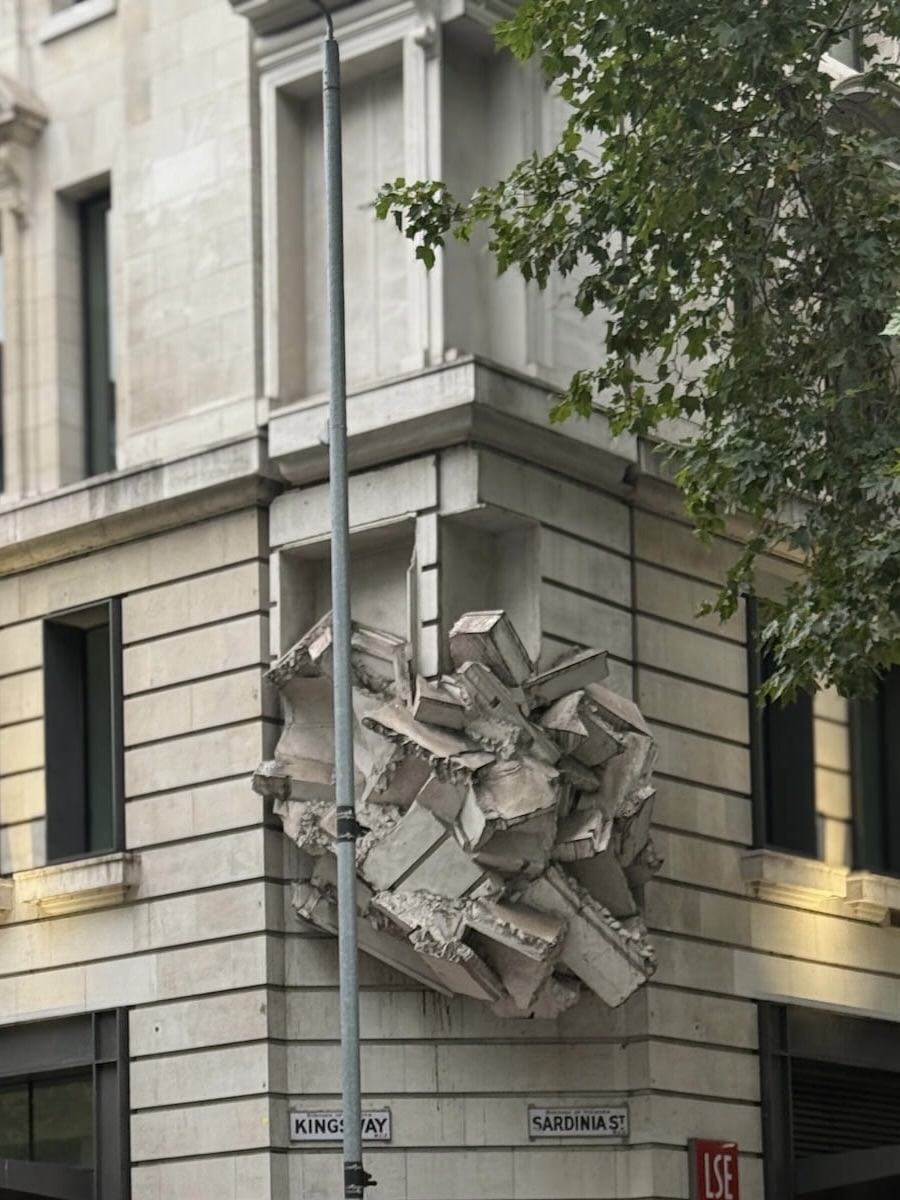
Square the Block

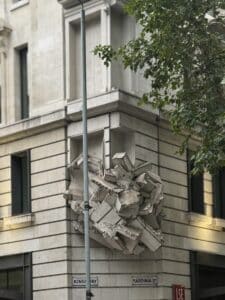
On a corner of the London School of Economics building sits a unique sculpture, making it look like the facade is unraveling.

London Underground Labyrinths

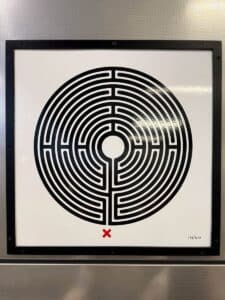
In each of the city’s 270 underground stations, there is a photo of a labyrinth. The hidden-in-plain-sight art is unique to each station. Can you find them all?

I hope this inspires you to get off the beaten path and explore the unique and unusual side of London. Also check out Unique Things to Do in Hanoi, Vietnam and How to Spend 24 hours in Singapore Airport. 

15 Unique and Unusual Things to Do in London Read More »